


Clear, Smooth & Spot-Free Skin with Skin Tag Removal Treatment
Skin tags can make your skin look uneven and may cause discomfort when they rub against clothing or jewelry. At Urban Skin and Hair Clinic, our advanced Skin Tag Removal treatments offer a safe, precise, and minimally invasive solution to remove these small, benign growths effectively. Using modern laser and radiofrequency technology, our dermatologists target the skin tag without harming the surrounding skin, ensuring a clean and smooth finish. Whether for cosmetic enhancement or everyday comfort, each treatment is tailored to your skin needs, providing a quick, comfortable, and low-downtime experience. With expert care, advanced tools, and a personalised approach, we help you achieve clear, smooth, and spot-free skin so you can feel confident and comfortable in your own skin again.
Symptoms and Causes
Signs & Symptoms of Skin Tags
Skin tags are small, fleshy growths that appear on the skin’s surface, often in skin folds or areas with friction.
They have a soft and smooth texture, are usually painless, and may be flesh-colored or slightly darker than the surrounding skin.
Although skin tags themselves are harmless, they can cause discomfort if snagged or irritated by clothing or jewelry.


What are the Causes of Skin Tags?
- Friction: Skin tags often develop in areas where skin rubs against skin or clothing, such as the neck, underarms, and groin. The constant friction can lead to their formation.
- Genetics: Some individuals may have a genetic predisposition to developing skin tags, making them more prone to experiencing this skin condition.
- Age: Skin tags tend to become more common as people age, with middle-aged and older individuals being more susceptible to their occurrence.
- Hormonal Changes: Certain hormonal changes, such as during pregnancy or in people with hormonal imbalances, can increase the likelihood of developing skin tags.
- Obesity: Being overweight or obese may also be a contributing factor, as excess skin folds and increased friction can promote the formation of skin tags.
- Diabetes: Some studies suggest that individuals with diabetes may have a higher incidence of skin tags, possibly due to factors related to insulin resistance and metabolic changes.

What are the Types of Skin Tags?
- Pedunculated Skin Tags: These skin tags are characterized by having a narrow stalk or stem that attaches them to the skin’s surface. They often appear as small, fleshy growths suspended from the skin.
- Intertriginous Skin Tags: These types of skin tags tend to develop in skin folds where friction occurs, such as in the armpits, groin, under the breasts, or between overlapping skin folds. They are commonly found in areas where skin rubs against skin or clothing.
- Irritated Skin Tags: These skin tags may become inflamed, red, or sore due to constant friction, rubbing, or irritation. The irritation can be caused by clothing, jewelry, or other external factors. While most skin tags are painless, irritated skin tags may cause discomfort or sensitivity.
Treatment for Skin Tags
The treatment of amyloidosis depends on the specific type of amyloid protein involved, the organs affected, the extent of amyloid deposition, and the overall health of the individual. Since there are several types of amyloidosis, the treatment approach may vary significantly. Here are some general treatment strategies used for different types of amyloidosis:
In this procedure, liquid nitrogen is used to freeze the skin tag, causing it to fall off within a few days.
Using electrical currents, the skin tag is burned off, leading to its removal. This method is effective for small to medium-sized skin tags.
For larger skin tags, a minor surgical procedure is performed to snip off the tag using surgical scissors or a scalpel. This ensures complete removal.
This method involves tying off the base of the skin tag with a sterile thread or suture, cutting off its blood supply, and causing it to eventually drop off.
he skin tag is cut off with a scalpel or surgical scissors, and the base is then cauterized to prevent bleeding and ensure proper removal.
Utilizing a focused laser beam, the skin tag is vaporized, leading to its elimination. This method is precise and typically requires no stitches.
At Urban Skin & Hair Clinic, our experienced dermatologists will assess your skin tags’ size, location, and medical history to recommend the most suitable treatment option for you. The procedures are safe, minimally invasive, and performed with precision, helping you achieve smooth and flawless skin.
Remember, it’s essential to avoid attempting to remove skin tags at home, as it may lead to infection and scarring. Trust the experts at Urban Skin & Hair Clinic to provide effective and personalized solutions for your skin tag concerns.
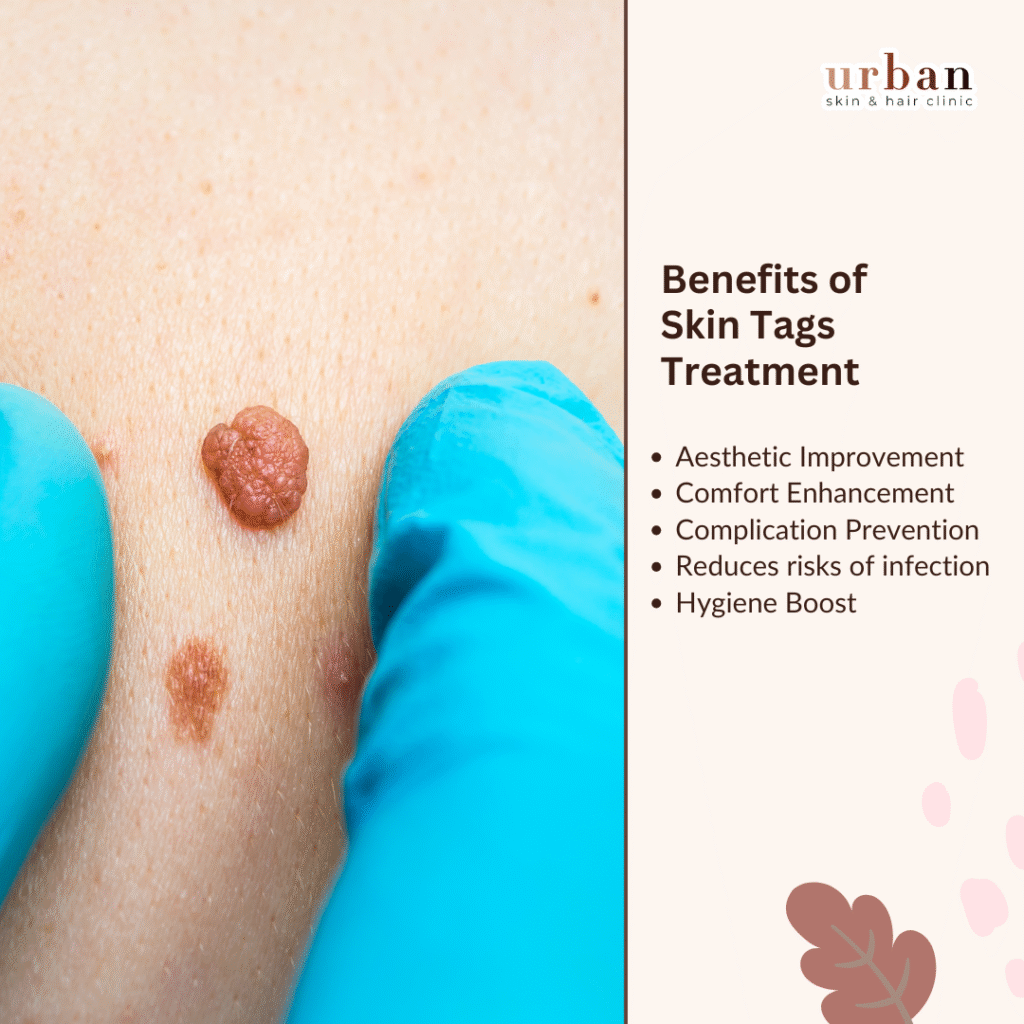
Benefits of Skin Tags Treatment
Skin tag removal treatments eliminate benign growths for smoother skin and greater comfort.
Aesthetic Improvement
Professional removal smooths uneven skin texture on neck, eyelids, or underarms, enhancing appearance and boosting self-confidence.
Comfort Enhancement
Eliminates irritation from friction against clothing or jewelry, preventing pain, redness, or bleeding in high-movement areas.
Complication Prevention
Reduces risks of infection, snagging, or growth enlargement; quick procedures like cryotherapy or laser ensure safe, scar-free results.
Hygiene Boost
Clears potential bacterial buildup sites in moist areas, promoting cleaner skin without recurrence of treated tags.
How To Prevent Skin Tags?
Prevent skin tags by minimizing friction, maintaining stable blood sugar, and supporting skin health through lifestyle adjustments.
Weight Management: Achieve and maintain a healthy BMI, as obesity increases skin folds where tags form due to friction and insulin resistance.
Friction Reduction: Wear loose clothing to avoid rubbing in neck, armpits, and groin areas; keep skin dry to prevent moisture buildup.
Diet Control: Limit refined sugars and carbs to stabilize insulin levels, which correlate with higher skin tag risk; include fiber-rich foods.
Skin Hygiene: Moisturize regularly without excess oil, and exfoliate gently to reduce irritation in prone areas.
Consult a Specialist Today
Many of the techniques for preventing pimples may also be used to cure them. Eating well, avoiding stress, and not popping pimples may help manage zits and reduce their length. If your acne continues despite your best efforts, you may need prescription acne treatment. Consult your dermatologist if you’re uncertain about treatment.
FAQ's
Skin tags, or acrochordons, are small, soft, hanging growths of collagen and blood vessels covered by skin, typically flesh-colored or darker.
No, skin tags are harmless and non-cancerous, though they may irritate or bleed if snagged; removal is cosmetic unless problematic.
Friction in skin folds, obesity, diabetes, pregnancy, or genetics increase risk, as they form where skin rubs against skin or clothing.
Avoid pulling or cutting them yourself to prevent infection, bleeding, or scarring; seek professional methods like cryotherapy or excision.
Removed tags do not regrow in the same spot, but new ones can develop in friction areas if underlying factors like weight persist.