


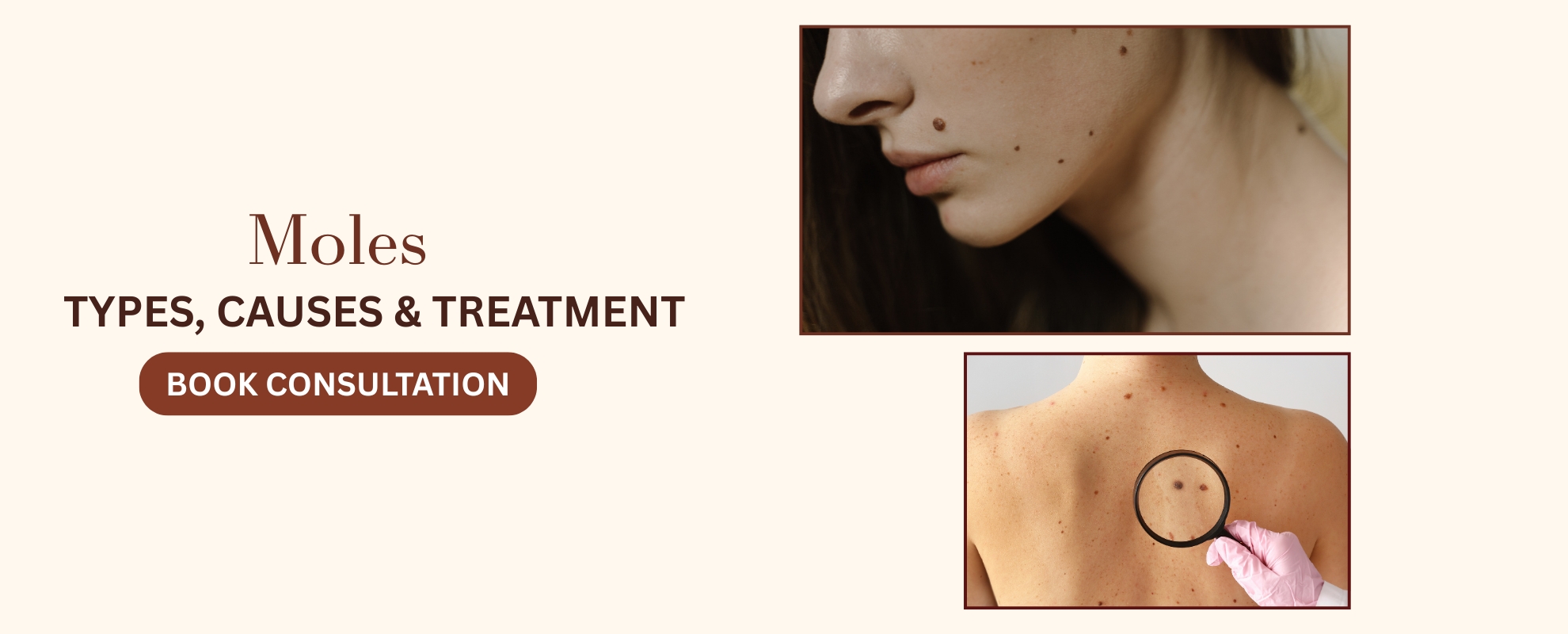
Clear, Smooth & Spot-Free Skin with Mole Removal Treatment In Pune
Symptoms and Causes
Signs & Symptoms of Moles
Mole Removal Treatment In Pune, Moles typically appear as small, dark spots on the skin, but their characteristics can vary. Here are some signs to look out for:
- Shape and Color: Most moles have a round or oval shape and are uniform in color. Irregular shapes or multiple colors within the same mole may indicate potential issues.
- Size: While moles can range in size, any significant enlargement should be monitored.
- Texture: Generally, moles are smooth, but changes in texture may be a cause for concern.
- Borders: Well-defined borders are normal for most moles. Blurred or jagged edges could be a red flag.
- Itching, Pain, or Bleeding: If a mole becomes itchy, painful, or starts bleeding, it should be examined by a dermatologist.


What are the Causes of Moles?
The primary cause of moles is a natural clustering of melanocytes in the skin. However, certain factors can influence their development:
- Genetics: Family history plays a significant role in determining the number and types of moles an individual may have.
- Sun Exposure: Prolonged exposure to ultraviolet (UV) rays from the sun can trigger the development of moles, especially in fair-skinned individuals.
- Hormonal Changes: Hormonal fluctuations, such as during pregnancy or adolescence, can lead to the appearance of new moles.

What are the Types of Moles?
Mole Removal Treatment In Pune, There are various types of moles, and understanding their characteristics can help identify potential risks. Here are the main types:
- Common Moles: These moles are typically small, round, and have a uniform color. They are benign and do not usually require treatment unless they undergo significant changes.
- Atypical Moles (Dysplastic Moles): Atypical moles are larger than common moles and may have irregular borders with varying shades of color. While most atypical moles are harmless, they have a higher chance of developing into melanoma.
- Congenital Moles: These moles are present at birth and vary in size. Larger congenital moles may have a higher risk of developing complications.
- Acquired Moles: These moles develop over time due to sun exposure and other factors. They are the most common type of mole.
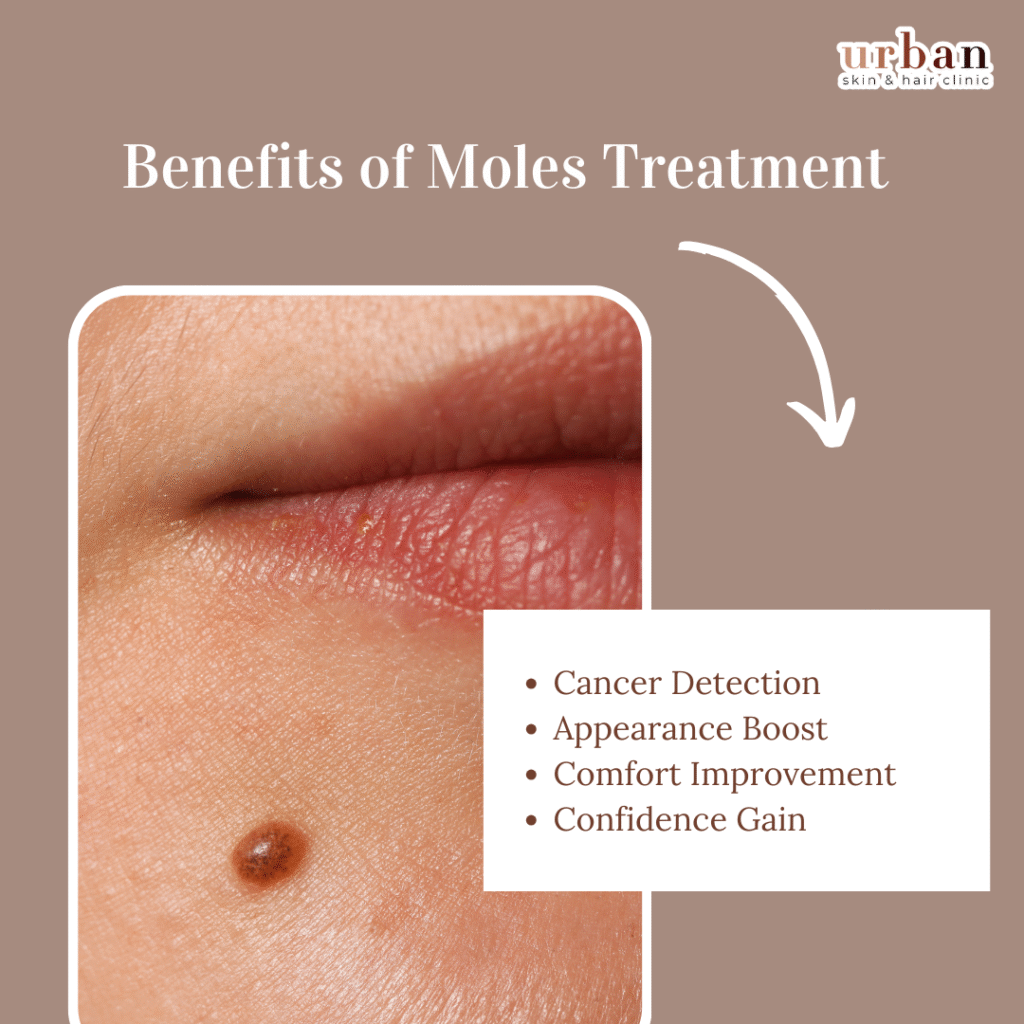
Benefits of Moles Treatment
Mole removal treatments offer medical screening and cosmetic enhancement by eliminating potentially risky or unsightly growths.
Cancer Detection
Biopsy during removal identifies melanoma early, enabling life-saving intervention when suspicious changes appear.
Appearance Boost
Smooths skin texture on face or body, improving aesthetics and allowing better makeup application or clothing fit.
Comfort Improvement
Eliminates irritation from rubbing clothing or shaving, reducing pain, bleeding, or infection risks.
Confidence Gain
Reduces self-consciousness about prominent moles, providing peace of mind and psychological relief.
How To Prevent Moles?
Prevent new moles by minimizing UV exposure, which triggers melanocyte clustering, while genetics largely determine baseline numbers.
Daily Sunscreen
Apply broad-spectrum SPF 30+ daily, reapplying every 2 hours outdoors, to block UV rays that promote mole formation.
Protective Clothing
Wear hats, long sleeves, and sunglasses during peak sun hours (10 AM-4 PM); seek shade to reduce skin damage.
Avoid Tanning Beds
Skip artificial UV sources entirely, as they accelerate mole development similar to natural sunlight.
Regular Monitoring
Self-examine skin monthly for changes; early dermatologist checks prevent risky moles from forming or worsening.
Treatment for Moles
Most moles are harmless and do not require treatment. However, if a mole shows suspicious characteristics or causes cosmetic concerns, medical intervention may be necessary. Treatments include:
A qualified dermatologist will assess the mole’s characteristics and determine if a biopsy is necessary.
For moles that require removal, surgical procedures like excision, shave excision, or laser removal may be used.
Regular self-examination of moles and sun protection measures can help prevent potential issues.
At Urban Skin & Hair Clinic, we prioritize your skin health and safety. If you have concerns about moles or any other skin conditions, don’t hesitate to schedule a consultation with our experienced dermatologists. Remember, early detection and proper care are key to maintaining healthy skin.
Consult a Specialist Today
Many of the techniques for preventing pimples may also be used to cure them. Eating well, avoiding stress, and not popping pimples may help manage zits and reduce their length. If your acne continues despite your best efforts, you may need prescription acne treatment. Consult your dermatologist if you’re uncertain about treatment.
FAQ
The duration of the mole removal procedure can vary depending on several factors, including the size, location, and type of mole being removed. In most cases, the procedure itself can be completed within a relatively short time frame, typically ranging from 15 minutes to an hour.
As per the circumstances, there may be additional costs associated with mole removal. These can include consultation fees, pre-operative evaluations or tests, post-operative medications or dressings, and any necessary follow-up appointments. It is essential to discuss these potential costs with your healthcare provider beforehand to have a clear understanding of the overall expenses.
Yes, carbon peeling is generally considered a safe procedure when performed by our expert dermatologist using safe techniques. The treatment has been widely used for skin rejuvenation and addressing various skin concerns with a good safety profile.
Our Dermatologists specialized in cosmetic procedures, such as carbon peeling, undergo extensive training and have in-depth knowledge of the skin’s anatomy and physiology. They understand how to assess the suitability of the treatment for each individual and tailor the procedure to their specific needs.
The level of discomfort experienced during mole removal can vary depending on the individual’s pain tolerance, the size and location of the mole, and the technique used for removal. In most cases, mole removal procedures are performed under local anesthesia to minimize any discomfort or pain. The anesthesia numbs the area being treated, reducing or eliminating pain during the procedure. However, patients may still feel some pressure or mild sensations during the removal process.