


Smooth, Hair-Free & Confident Skin with Milia Treatment In Pune
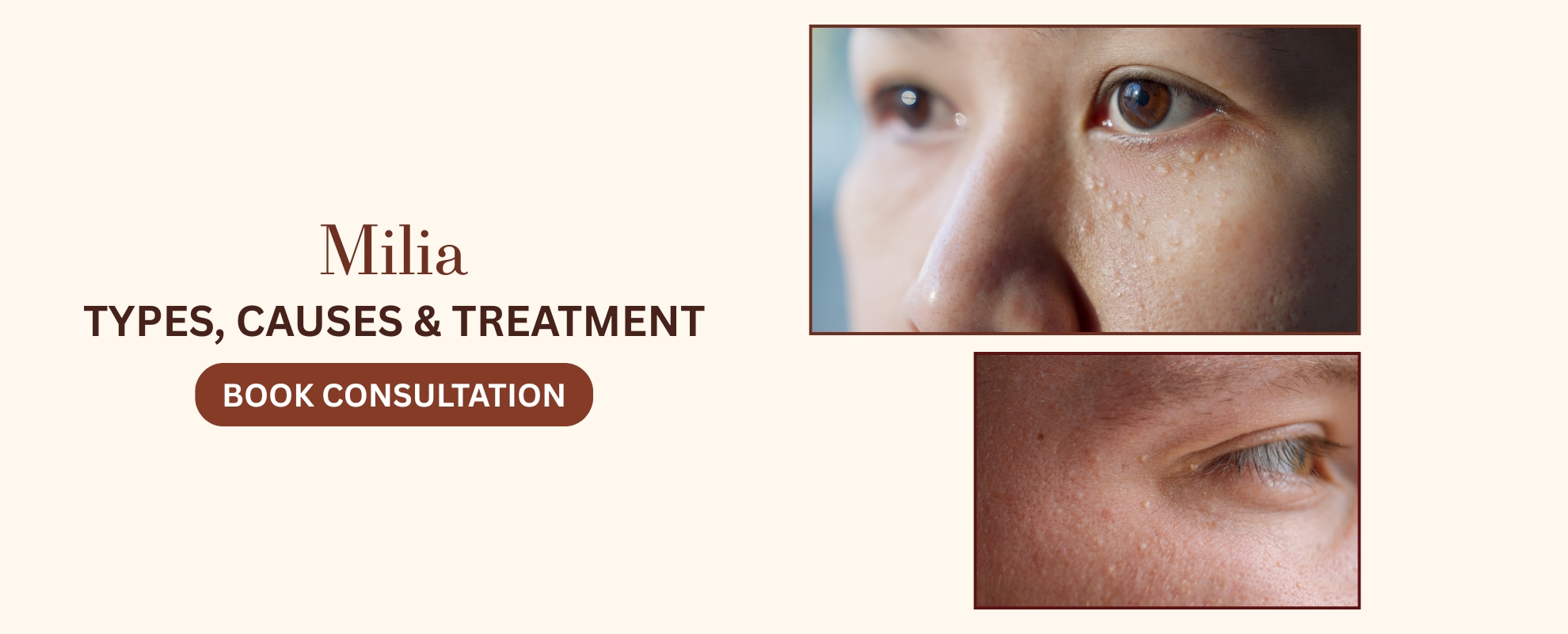
These cysts form when dead skin cells and trapped keratin become trapped beneath the skin’s surface, leading to the characteristic pearly-white appearance.
Symptoms and Causes
Signs & Symptoms of Milia
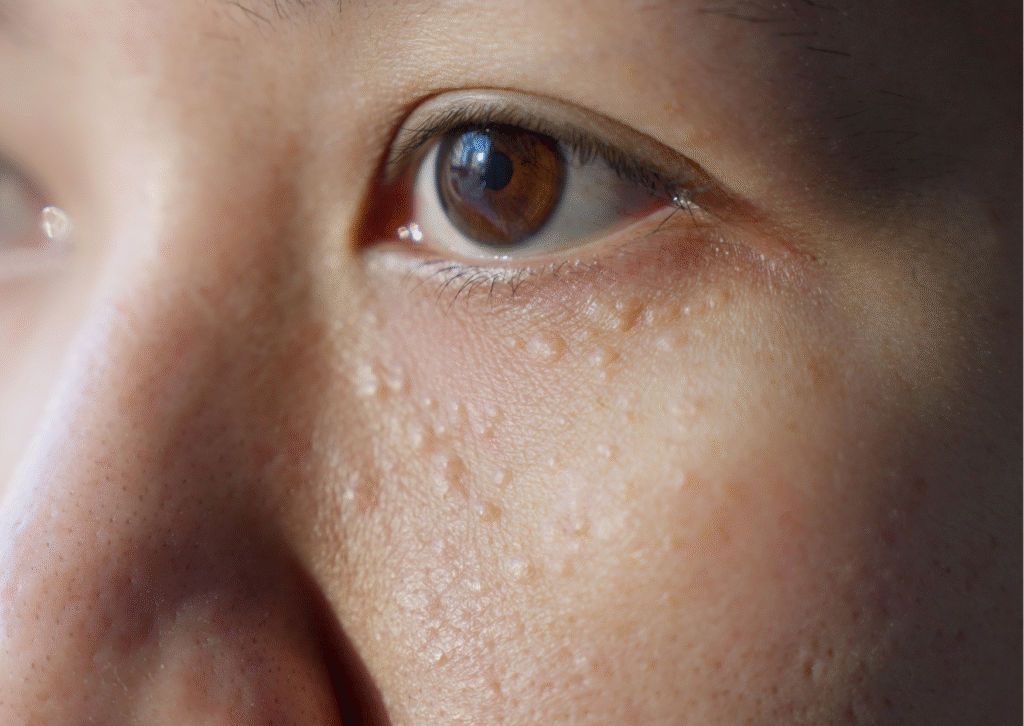
Milia Treatment In Pune, Milia are easily recognizable due to their distinct appearance. The key symptoms include:
- Small, white, or yellowish cysts on the skin’s surface.
- Dome-shaped bumps that feel smooth to the touch.
- Typically clustered around the eyes, cheeks, nose, and forehead.
- Usually painless and not associated with inflammation.


What are the Causes of Milia?
Understanding the underlying causes of Milia is essential to find an effective solution. The primary factors contributing to the development of Milia include:
- Keratin buildup: When dead skin cells become trapped beneath the skin’s surface, it can lead to the formation of Milia.
- Skin damage: Trauma or injury to the skin, such as burns or blistering, may trigger secondary Milia.
- Sun exposure: Prolonged sun exposure can damage the skin and contribute to the development of Milia.
- Skin care products: Certain heavy or comedogenic skincare products can clog pores and lead to Milia formation.

What are the Types of Milia?
There are two main types of Milia
- Primary Milia: This type of Milia appears spontaneously on the skin and is usually associated with newborns and infants. Primary Milia typically resolves on its own within a few weeks.
- Secondary Milia: Unlike primary Milia, secondary Milia develops as a result of skin damage or trauma, such as burns, blistering injuries, excessive sun exposure, or the prolonged use of certain topical creams. Secondary Milia requires specialized treatment and tends to persist until addressed.
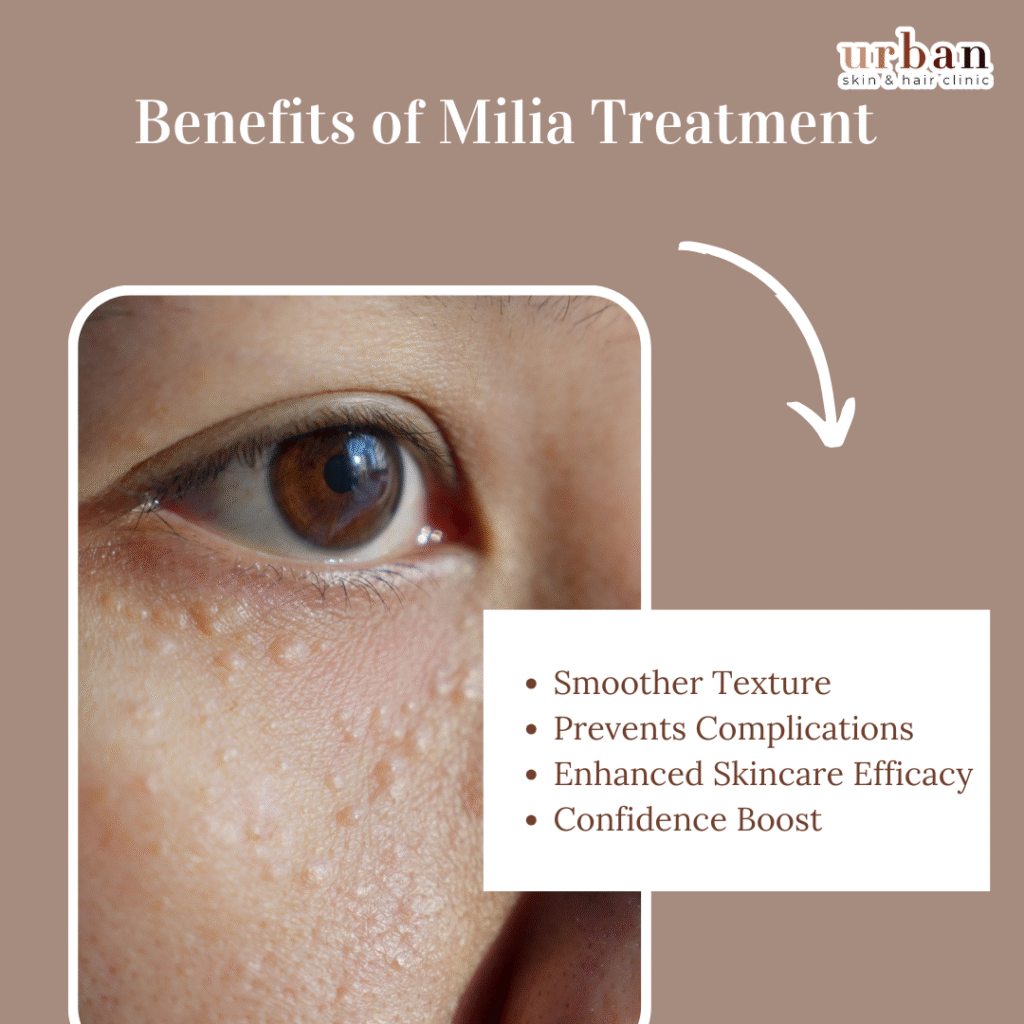
Benefits of Milia Treatment
Milia Treatment In Pune, Milia treatment removes trapped keratin cysts under the skin, restoring a smoother facial appearance.
Smoother Texture
Professional extraction or peels eliminate white bumps, preventing clogged pores and uneven skin surface for clearer complexion.
Prevents Complications
Reduces risk of inflammation or scarring from picking; retinoids speed cell turnover to avoid recurrence.
Enhanced Skincare Efficacy
Cleared skin allows better absorption of moisturizers and serums, improving hydration and anti-aging results.
Confidence Boost
Bump-free skin enhances makeup application and daily comfort, especially around eyes and cheeks.
How To Prevent Milia?
Prevent milia by promoting gentle exfoliation and avoiding pore-clogging products that trap keratin under the skin.
Gentle Exfoliation
Use mandelic acid, salicylic acid, or enzyme cleansers 2-3 times weekly to slough off dead cells without irritation; avoid harsh scrubs.
Non-Comedogenic Skincare
Choose lightweight, oil-free moisturizers and sunscreens (SPF 30+); skip heavy creams or ascorbic acid vitamin C around eyes.
Retinoid Incorporation
Apply retinol or adapalene nightly to boost cell turnover, starting low to prevent dryness; always pair with sunscreen.
Daily Habits
Double cleanse properly, stay hydrated, and protect from sun damage, which impairs natural shedding.
Treatment for Skin Tags
At Urban Skin & Hair Clinic, we offer effective treatments to address Milia and restore your skin’s natural radiance. Depending on the type and severity of Milia, our experienced dermatologists may recommend the following treatments:
For primary Milia in infants, debridement may be sufficient, which involves gently removing the cysts with a sterile needle.
Using electrical currents, the skin tag is burned off, leading to its removal. This method is effective for small to medium-sized skin tags.
Chemical peels can exfoliate the skin and unclog pores, reducing the appearance of Milia and promoting a smoother complexion.
This method involves tying off the base of the skin tag with a sterile thread or suture, cutting off its blood supply, and causing it to eventually drop off.
Remember, Milia may sometimes resolve on its own, but seeking professional advice and treatment can help expedite the process and prevent further complications.
At Urban Skin & Hair Clinic, we understand the distress that skin conditions like Milia can cause. Our team of skilled dermatologists is dedicated to providing personalized treatment plans to help you achieve healthy, clear skin. Don’t hesitate to reach out to us for a consultation and start your journey towards glowing skin today.
Consult a Specialist Today
At Urban Skin and Hair Clinic, Dr. [Name] offers personalized treatment plans for skin tag removal after carefully examining your skin type and medical history. Whether it’s one skin tag or many, your treatment will be safe, effective, and comfortable.
FAQ
Milia form when keratin, a skin protein, gets trapped under the surface, often from dead skin buildup, heavy creams, or skin trauma like burns
No, milia are benign, non-contagious cysts that pose no health risk and do not turn cancerous.
Yes, especially in newborns; adult milia may persist but often resolve with exfoliation or time.
No, squeezing risks scarring, infection, or inflammation; professional extraction is safest.
Use non-comedogenic products, gentle exfoliants like retinoids, and sunscreen to promote skin shedding.