



Pain & Spot-Free Skin with Gynecomastia Treatment
Gynecomastia is a medical condition characterized by the enlargement of glandular tissue in the male breast. This results in the appearance of swollen or overdeveloped breasts, leading to self-consciousness and discomfort for those affected.
While it is not a life-threatening condition, it can significantly impact an individual’s emotional well-being and body image.

Symptoms and Causes
Signs & Symptoms of Gynecomastia
Identifying Gynecomastia involves observing the following signs and symptoms:
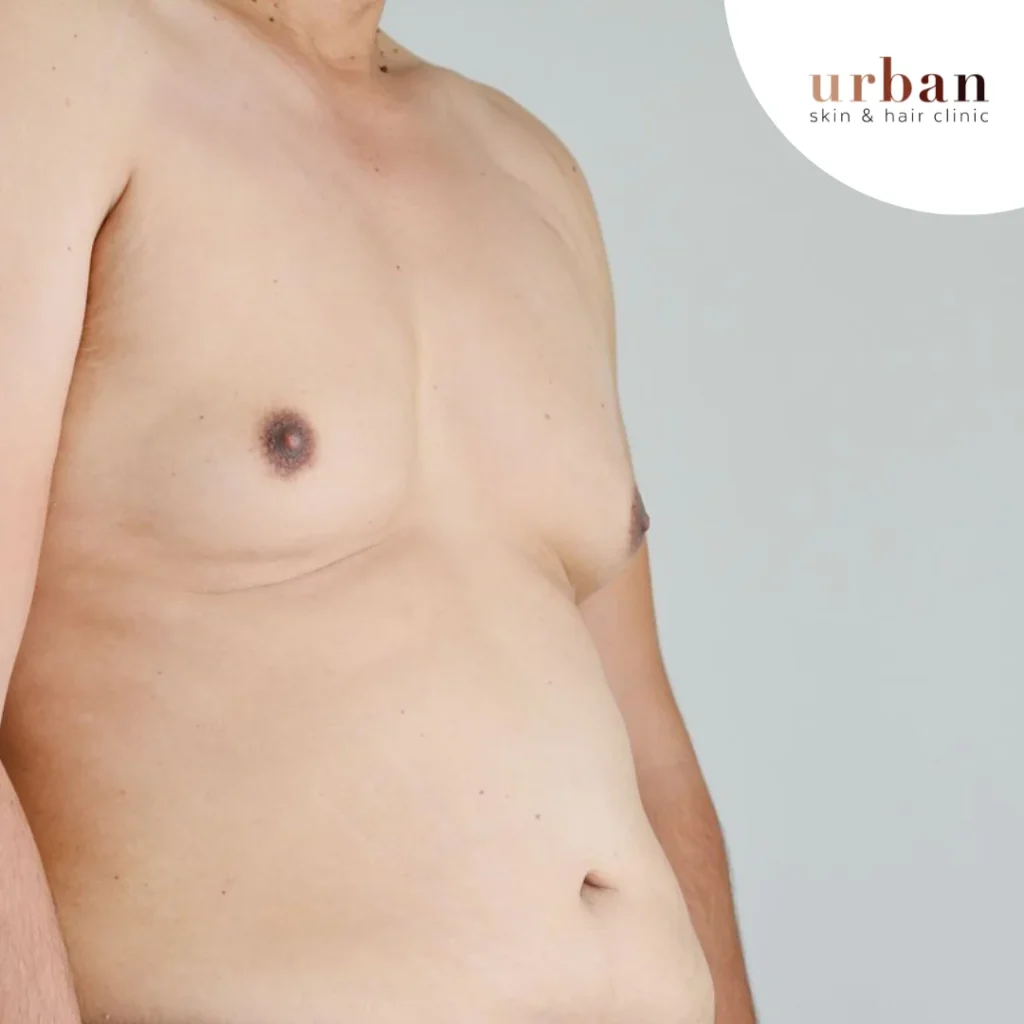
- Swelling or enlargement of breast tissue in one or both breasts.
- The breast area may feel tender or sensitive to touch.
- It can be accompanied by pain or discomfort.
- The areola (the dark area surrounding the nipple) may enlarge and become puffy.
- Uneven breast growth, with one side being more affected than the other.

What are the Causes of Gynecomastia?
Understanding the reasons behind Gynecomastia is crucial in addressing the condition effectively. Some common causes include:
- Hormonal Imbalance: Fluctuations in estrogen and testosterone levels can disrupt the hormonal balance, leading to breast tissue enlargement.
- Puberty: During adolescence, hormonal changes can trigger temporary Gynecomastia in some boys, which often resolves on its own.
- Medications: Certain drugs, such as anabolic steroids, anti-androgens, and some antidepressants, can contribute to Gynecomastia.
- Medical Conditions: Conditions affecting the testicles, adrenal glands, or pituitary gland can cause hormonal imbalances that lead to Gynecomastia.
- Age: Hormonal changes that occur with age can also play a role in the development of Gynecomastia.

What are the Types of Gynecomastia?
Here are two primary types of Gynecomastia:
- True Gynecomastia: This type occurs when there is actual glandular breast tissue enlargement. It is often linked to hormonal imbalances, particularly an increase in estrogen levels relative to testosterone.
- Pseudo-Gynecomastia: Unlike true Gynecomastia, this type is characterized by an increase in fatty tissue in the breast area without significant glandular enlargement. It is commonly associated with weight gain or obesity.
Benefits of Gynecomastia Treatment
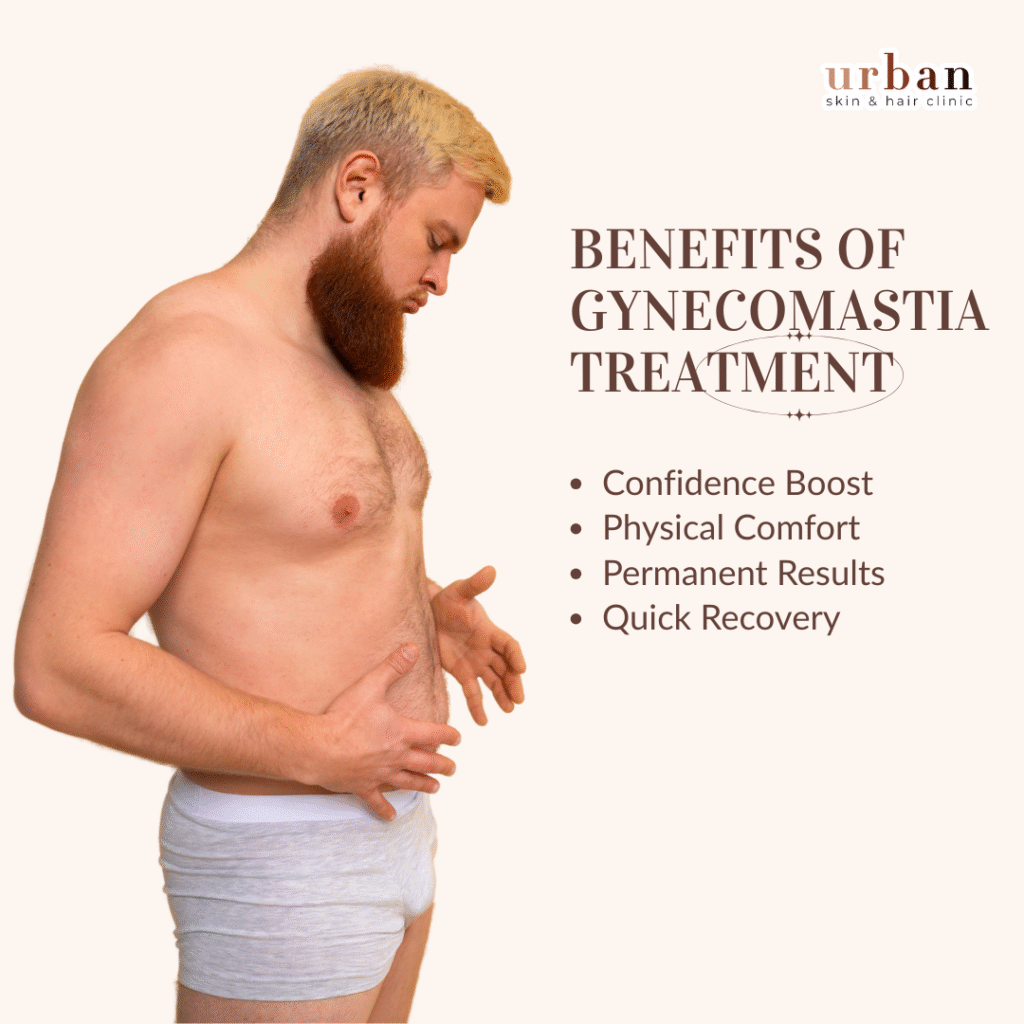
Gynecomastia treatment, often via surgery like liposuction or excision, removes excess breast tissue in men for a flatter, masculine chest contour.
Confidence Boost
Eliminates self-consciousness about chest appearance, improving social interactions, clothing choices, and intimate relationships.
Physical Comfort
Reduces pain, tenderness, and back strain from excess tissue weight, enhancing mobility during exercise or daily activities.
Permanent Results
Removes glandular and fatty tissue that doesn’t regrow, providing long-lasting masculine shape unlike temporary methods.
Quick Recovery
Outpatient procedure with minimal downtime; most resume light activities in days and full routines in weeks.
Treatment for Gynecomastia
At Urban Skin & Hair Clinic, we offer a range of effective treatments to address Gynecomastia and help you achieve the desired aesthetic results. Our expert dermatologists and cosmetic surgeons will guide you through the most suitable options, which may include:
n cases where hormonal imbalances are the cause, hormone therapy may be recommended to restore the balance of estrogen and testosterone.
For pseudo-Gynecomastia, where excess fatty tissue is the primary concern, liposuction can be performed to remove the unwanted fat deposits.
In severe cases of true Gynecomastia, surgical procedures may be necessary to remove the excess breast tissue and restore a more masculine chest contour.
Gynecomastia can be distressing for those experiencing it, impacting their self-esteem and quality of life. At Urban Skin & Hair Clinic, our team of skilled professionals is dedicated to providing personalized solutions for Gynecomastia, addressing the underlying causes and helping you regain your confidence. Don’t let Gynecomastia hold you back – take the first step towards a more confident you with our expert care and advanced treatments.
How To Prevent Gynecomastia?
Gynecomastia prevention targets hormonal balance and lifestyle factors to avoid excess breast tissue growth in men.
Healthy Diet
Eat lean proteins (chicken, fish), vegetables, fruits, and healthy fats (avocados, nuts) while avoiding processed foods, sugars, and excess alcohol that raise estrogen.
Regular Exercise
Perform 150+ minutes weekly of cardio (running, swimming) plus chest-focused strength training (push-ups, bench presses) to burn fat and build muscle.
Avoid Triggers
Quit smoking, limit alcohol, and avoid anabolic steroids or medications causing estrogen spikes; manage stress through yoga or meditation.
Medical Monitoring
Get hormone levels checked if at risk (obesity, puberty); maintain healthy weight to regulate testosterone-estrogen ratio.
Consult a Specialist Today
Many of the techniques for preventing pimples may also be used to cure them. Eating well, avoiding stress, and not popping pimples may help manage zits and reduce their length. If your acne continues despite your best efforts, you may need prescription acne treatment. Consult your dermatologist if you’re uncertain about treatment.
FAQ's
Hormonal shifts raising estrogen over testosterone, often from puberty, obesity, medications, steroids, or liver issues trigger glandular growth.
Pubertal gynecomastia often resolves in 1-2 years; adult cases may persist without treatment.
No, lifestyle changes or hormone therapy help mild cases; surgery provides permanent removal for glandular tissue.
Rare if underlying causes are addressed; maintaining weight and avoiding triggers minimizes risk.
No, it’s benign, but evaluation rules out rare tumors; surgery includes biopsy for safety.