


Pain & Spot-Free Skin with Freckles Treatment In Pune
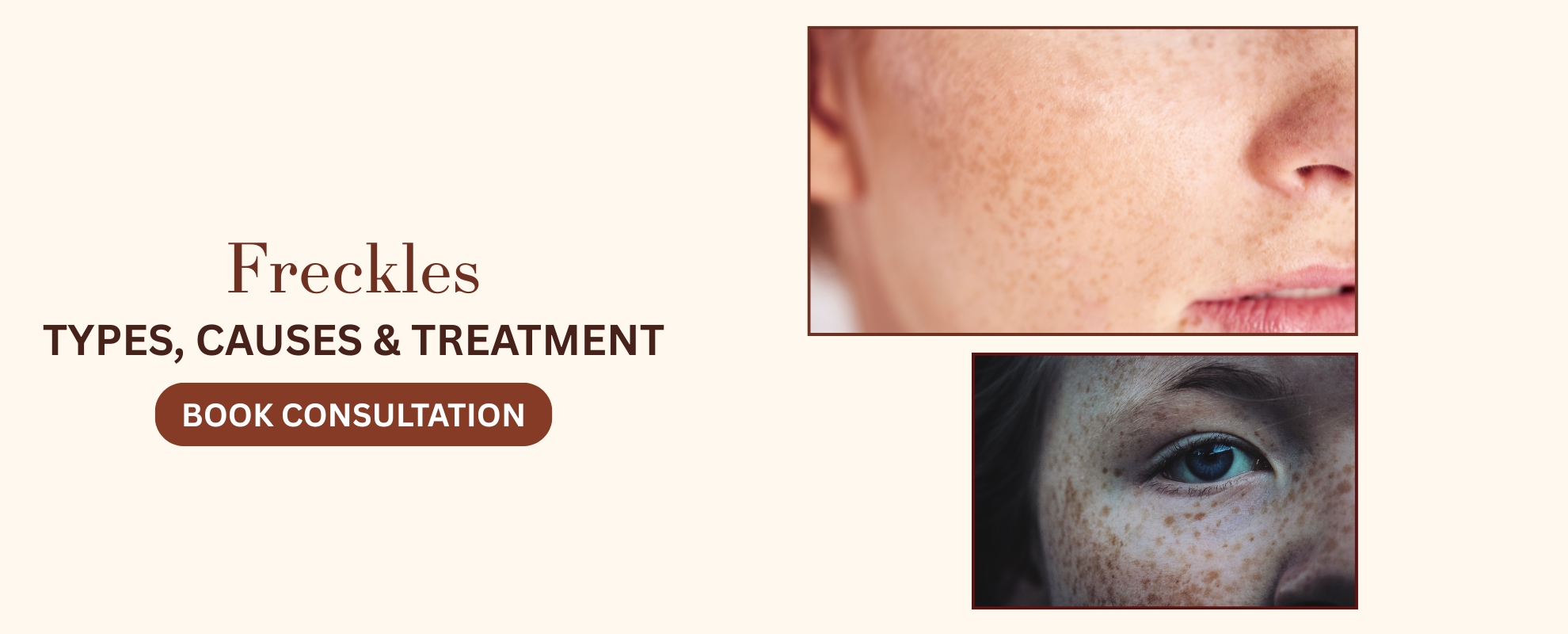
Freckles are clusters of concentrated melanin, the pigment responsible for the color of our skin, hair, and eyes.
They are harmless and often appear as flat, light to dark brown spots on sun-exposed areas of the skin, such as the face, arms, and shoulders.
Though freckles can develop at any age, they are more commonly seen in fair-skinned individuals.
Freckles Treatment In Pune, Freckles, Freckles Treatment, Freckles Treatment In Pune, Freckles, Freckles Treatment,Freckles Treatment In Pune, Freckles, Freckles Treatment, Freckles Treatment In Pune, Freckles, Freckles Treatment, Freckles Treatment In Pune, Freckles, Freckles Treatment, Freckles Treatment In Pune, Freckles, Freckles Treatment, Freckles Treatment In Pune, Freckles, Freckles Treatment, Freckles Treatment In Pune, Freckles, Freckles Treatment

Symptoms and Causes
Signs & Symptoms of Freckles
Freckles are easy to identify due to their characteristic appearance. The key signs and symptoms include:
- Small, flat spots with varying shades of brown.
- Typically found on sun-exposed areas of the body.
- More prominent during or after sun exposure.
- May darken in color during the summer months.


What are the Causes of Freckles?
The primary cause of freckles is genetics. People with a family history of freckles are more likely to develop them. The main contributing factor is exposure to ultraviolet (UV) radiation from sunlight. When the skin is exposed to UV rays, it triggers the production of melanin, resulting in the formation of freckles.
Individuals with fair skin have less melanin to shield against UV radiation, making them more susceptible to freckles. Additionally, those with lighter eyes and hair may also be prone to developing freckles.

What are the Types of Freckles?
There are two primary types of freckles:
- Ephelides: These are the most common type of freckles, usually found in individuals with fair skin. Ephelides tend to fade during the winter months and darken with sun exposure.
- Lentigines: Unlike ephelides, lentigines do not lighten or fade with reduced sun exposure. They have a more defined and darker appearance, often associated with aging skin and prolonged sun exposure.
Treatment for Freckles
At Urban Skin & Hair Clinic, we offer advanced and personalized treatment options to effectively address stretch marks and improve the appearance of your skin:
Dermatologists may prescribe bleaching creams or retinoids containing alpha hydroxy acids (AHAs) or hydroquinone to lighten freckles gradually.
This procedure involves applying a chemical solution to the skin, exfoliating the top layer and reducing the appearance of freckles.
Chemical peels can help in exfoliating the outer layer of the skin, leading to the regeneration of smoother, healthier skin.
This treatment involves freezing the freckles with liquid nitrogen, causing them to peel off, revealing clearer skin.
At Urban Skin & Hair Clinic, we understand the impact skin conditions like freckles can have on one’s self-confidence. Freckles, though harmless, can be bothersome to some individuals.
Benefits of Freckles Treatment
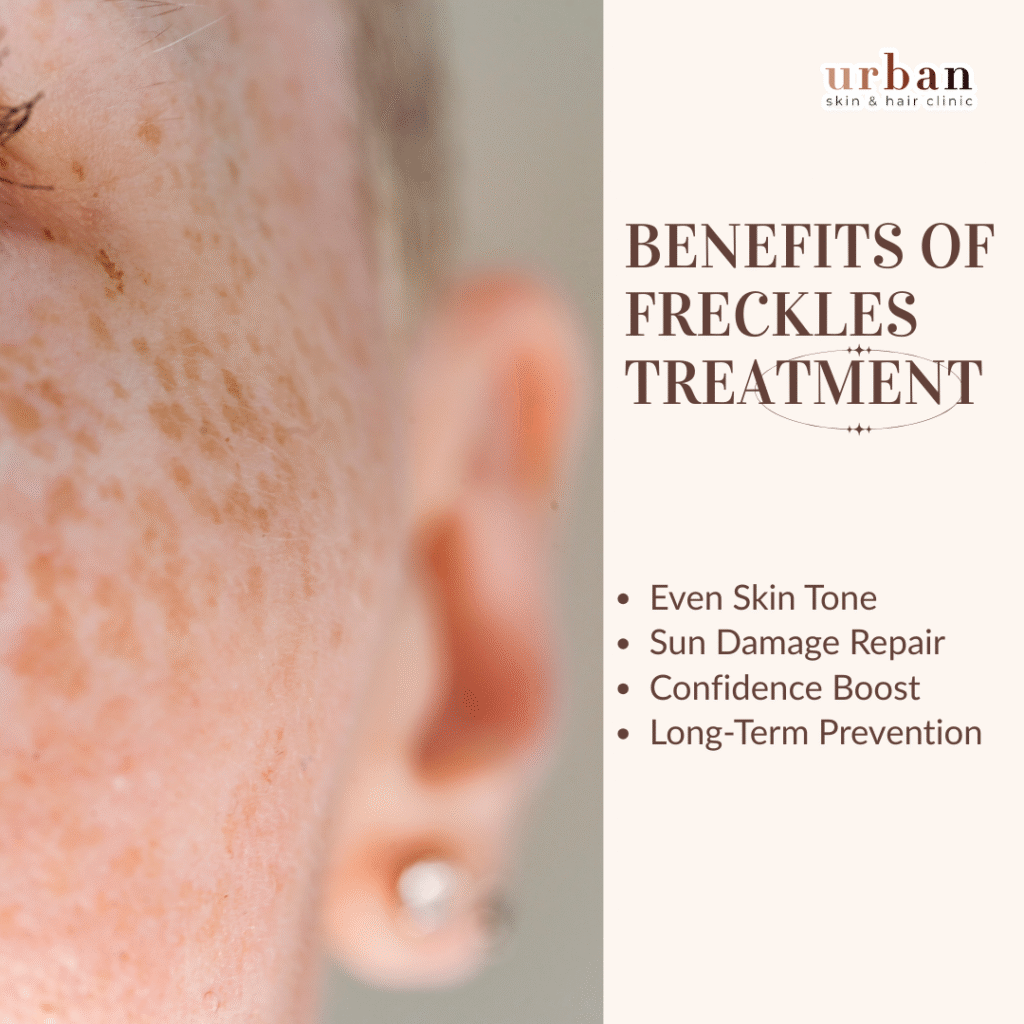
Freckle treatments fade melanin clusters from sun exposure, delivering even skin tone and protection against further pigmentation.
Even Skin Tone
Laser or chemical peels break down excess pigment, blending freckles with surrounding skin for uniform complexion after 3-6 sessions.
Sun Damage Repair
Targets UV-induced melanin buildup, reducing brown spots while improving texture without harming healthy tissue.
Confidence Boost
Clears visible facial freckles, enhancing makeup application and daily appearance for smoother, brighter results.
Long-Term Prevention
Retinoids and peels promote cell turnover, minimizing new freckle formation with consistent sunscreen use.
How To Prevent Freckles?
Freckle prevention centers on blocking UV rays that trigger melanin production in genetically predisposed skin.
Daily Sunscreen
Apply broad-spectrum SPF 30+ every morning, reapplying every 2 hours outdoors, to suppress freckle darkening and new formation.
Protective Clothing
Wear wide-brimmed hats, long sleeves, and sunglasses during peak sun (10 AM-4 PM); seek shade to minimize exposure.
Antioxidant Skincare
Use vitamin C serums and niacinamide daily to neutralize free radicals and inhibit tyrosinase enzyme for even tone.
Avoid Tanning
Skip sunbeds and tanning oils entirely, as artificial UV accelerates freckling like natural sunlight.
Consult a Specialist Today
Many of the techniques for preventing pimples may also be used to cure them. Eating well, avoiding stress, and not popping pimples may help manage zits and reduce their length. If your acne continues despite your best efforts, you may need prescription acne treatment. Consult your dermatologist if you’re uncertain about treatment.
FAQ's
Freckles (ephelides) result from genetics combined with UV exposure, causing melanocytes to overproduce pigment in clusters on sun-exposed areas like the face.
No, common freckles are benign and non-cancerous, unlike moles; they fade in winter but darken with sun—monitor for irregular changes.
Yes, childhood freckles often lighten with age or less sun exposure, though genetic predisposition persists.
Primarily fair-skinned people with light hair/eyes, but darker tones may develop similar solar lentigines from cumulative sun damage.
Daily SPF 30+ sunscreen, hats, and avoiding peak sun hours minimize darkening; antioxidants like vitamin C help.