


Clear, Healthy & Confident Skin with Acne Treatment
Acne is a common skin concern that can lead to scars and reduced confidence. For the best acne treatment in Pune, Urban Skin and Hair Clinic offers advanced, personalised solutions. Our expert dermatologists specialise in acne treatment in PCMC, including pimple treatment, acne scar treatment, chemical peels, and laser acne treatments in Pune helping control breakouts, reduce oil, and improve overall skin texture for clear, healthy skin.
Symptoms and Causes
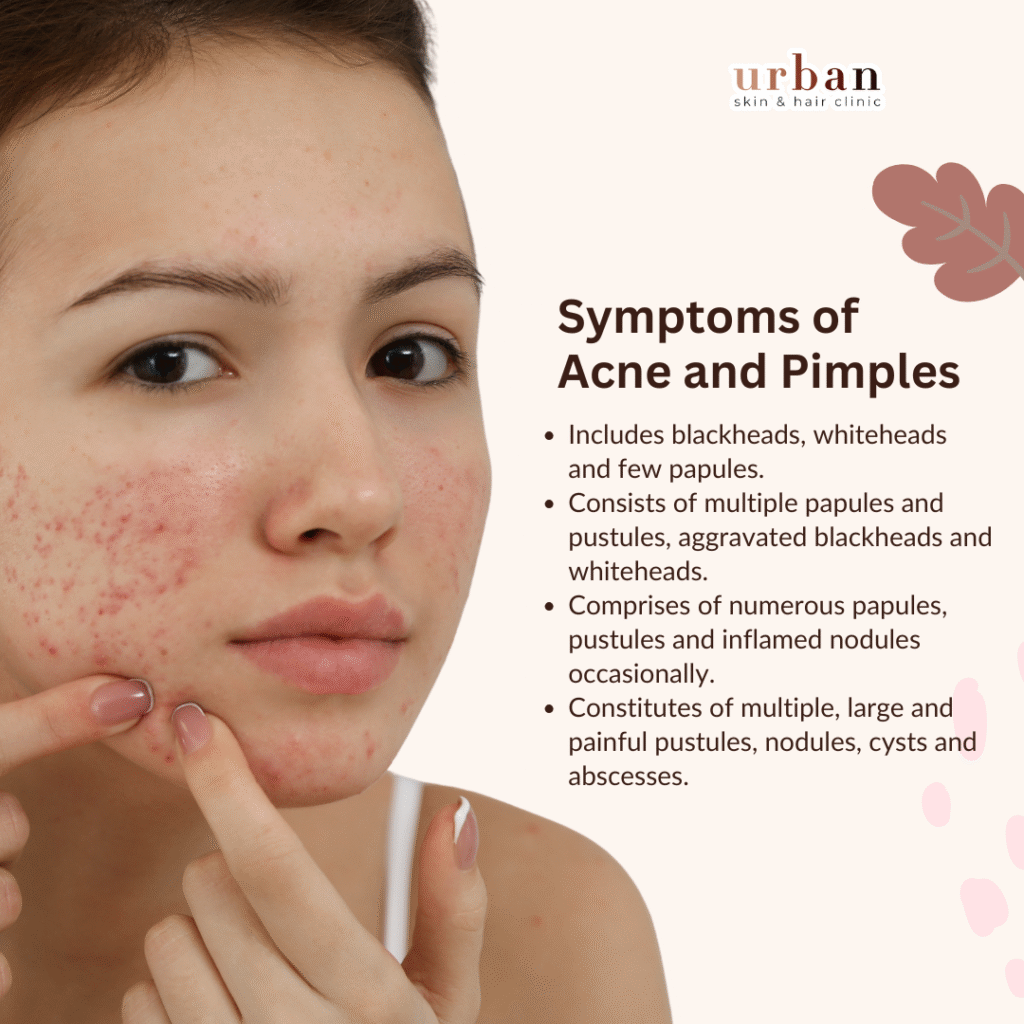
Symptoms of Acne and Pimples
Acne vulgaris is mainly classified into inflammatory and non-inflammatory types, ranging from mild to severe. For accurate diagnosis, consulting an expert at Urban Skin and Hair Clinic is essential, as our specialists provide the best acne treatment in Pune based on your skin condition.
Acne is graded as:
- Grade 1: Blackheads, whiteheads, and mild papules
- Grade 2: Multiple papules, pustules, and increased breakouts
- Grade 3: Severe inflammation with nodules and pus-filled acne
- Grade 4: Large, painful cysts, nodules, and deep acne scars
If you’re looking for acne treatment in PCMC or a trusted dermatologist for acne in Pune, our clinic offers personalised care to treat every stage effectively.
Causes of Acne and Pimples
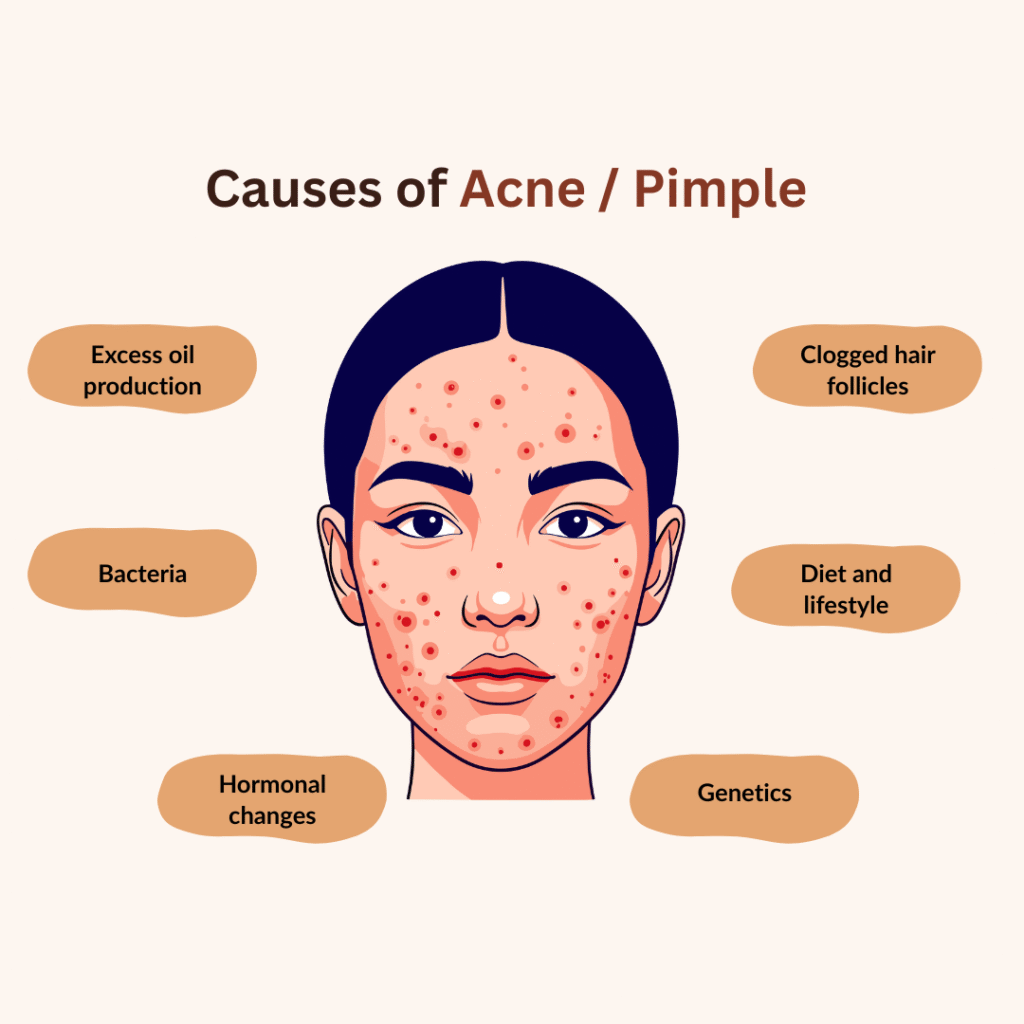
Acne and pimples happen when the skin’s natural oil (sebum), dead cells, and bacteria block the pores. Several factors can trigger or worsen acne:
- Excess oil production: Skin produces too much sebum, which can clog pores.
- Clogged hair follicles: Dead skin cells or debris accumulate in pores.
- Bacteria: Propionibacterium acnes (or Cutibacterium acnes) grows in clogged pores and causes inflammation.
- Hormonal changes: Puberty, periods, pregnancy, or hormonal disorders can trigger acne.
- Diet and lifestyle: High sugar foods, dairy, stress, and lack of sleep may contribute.
- Medications & Cosmetics: Some drugs or heavy, pore-clogging creams can worsen acne.
- Genetics: If your parents had acne, you are more likely to get it too.
What Are the Types of Acne?
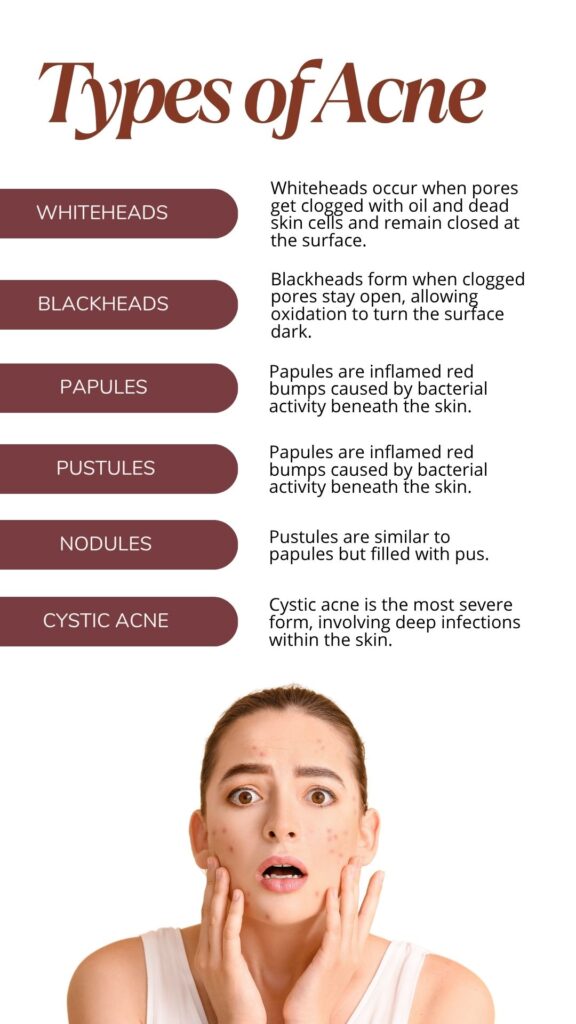
1. Whiteheads (Closed Comedones) : Whiteheads occur when pores get clogged with oil and dead skin cells and remain closed at the surface.
Appearance: Small, white or flesh-colored bumps.
Common Areas: Forehead, cheeks, nose, chin.
2. Blackheads (Open Comedones): Blackheads form when clogged pores stay open, allowing oxidation to turn the surface dark.
Appearance: Small black dots on the skin.
Common Areas: Nose, chin, and T-zone.
3. Papules: Papules are inflamed red bumps caused by bacterial activity beneath the skin.
Appearance: Small, tender, red bumps without pus.
Common Areas: Cheeks, forehead, and jawline.
4. Pustules: Pustules are similar to papules but filled with pus.
Appearance: Red bumps with a white or yellow center.
Common Areas: Face, chest, and back.
5. Nodules: Nodules are severe forms of acne caused by deeply clogged pores and inflammation.
Appearance: Large, painful, hard lumps under the skin.
Common Areas: Face, jawline, back, shoulders.
6. Cystic Acne: Cystic acne is the most severe form, involving deep infections within the skin.
Appearance: Large, soft, pus-filled cysts that can cause scarring.
Common Areas: Cheeks, chin, back, and shoulders.
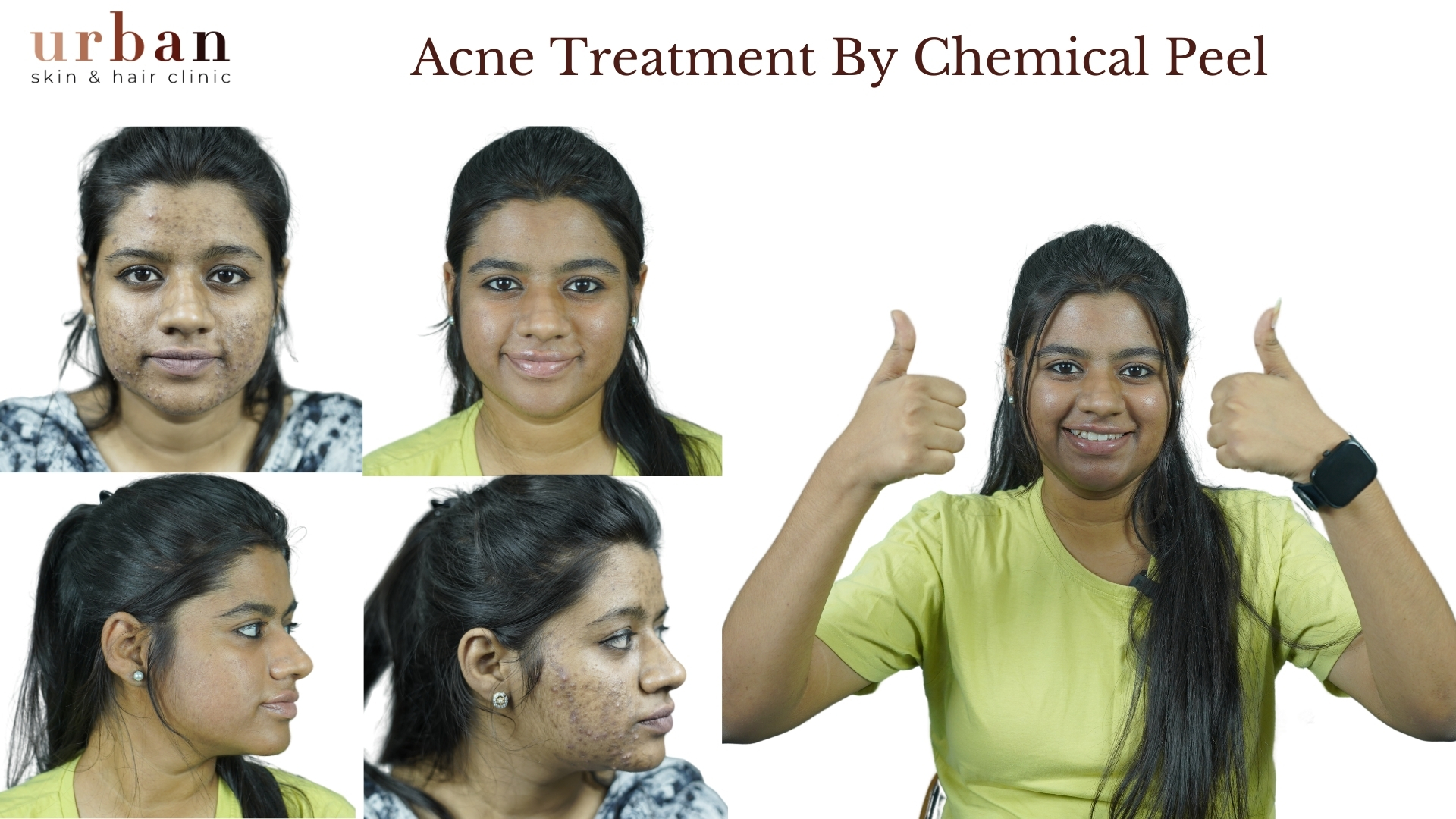
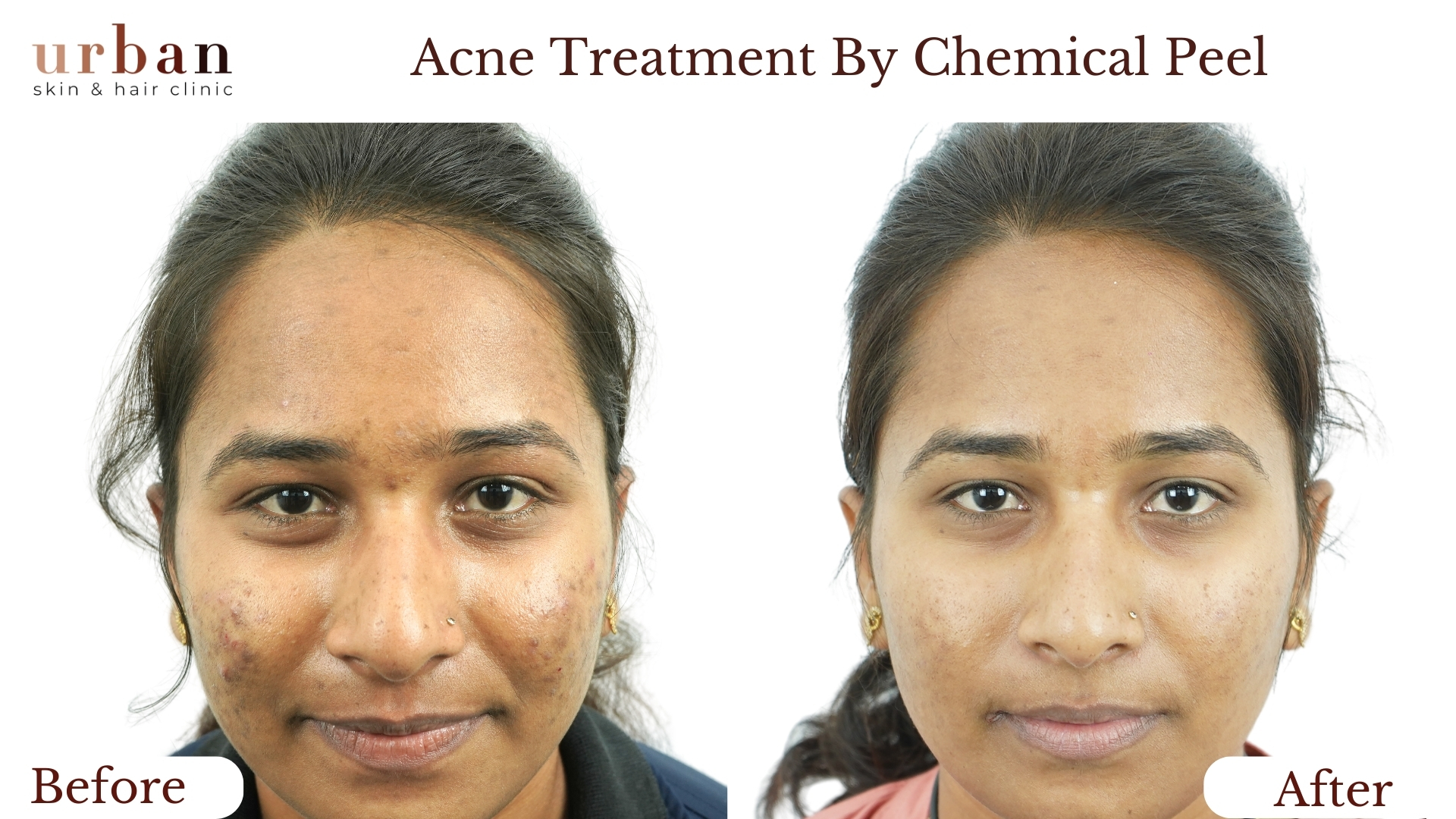
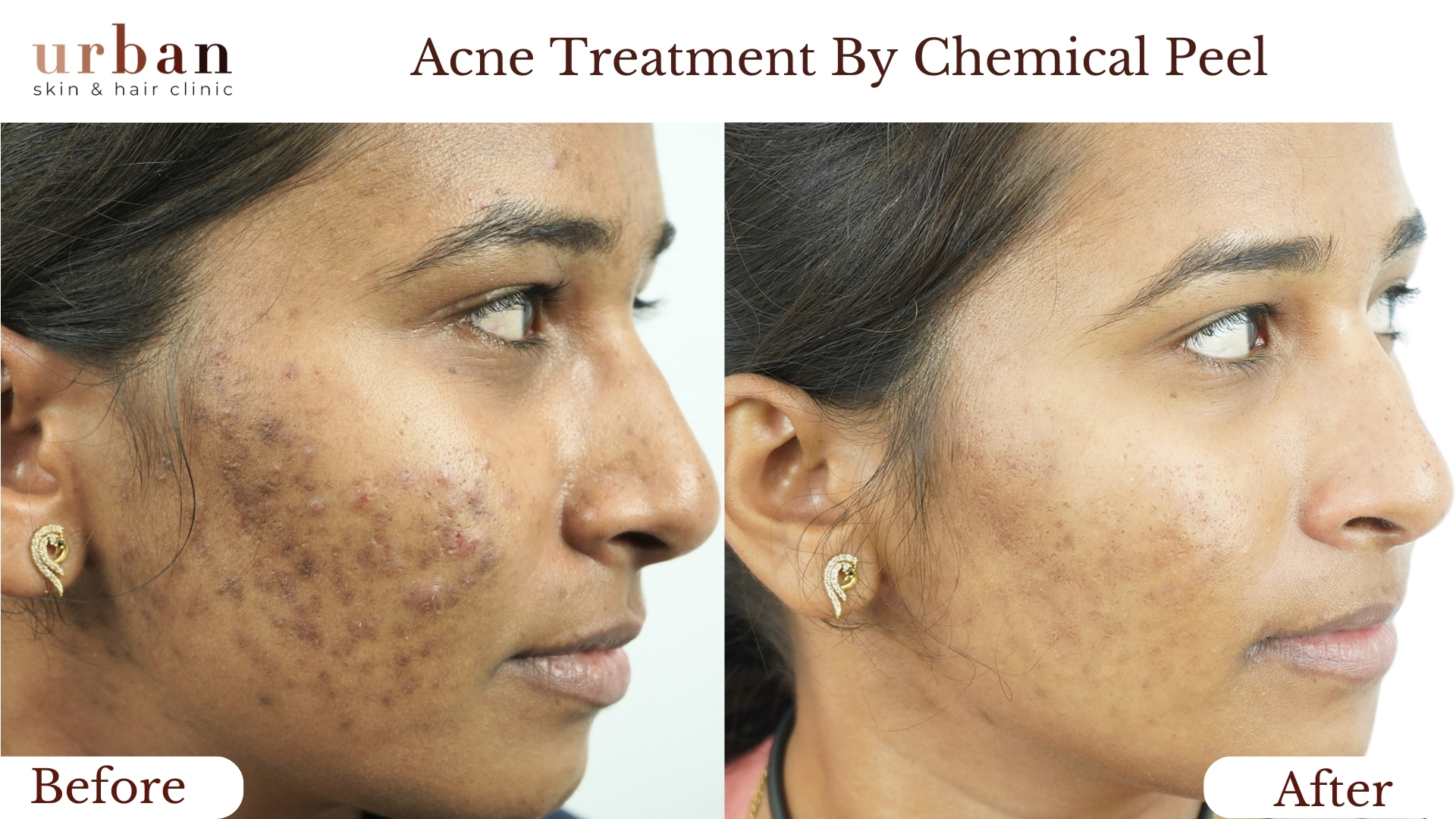
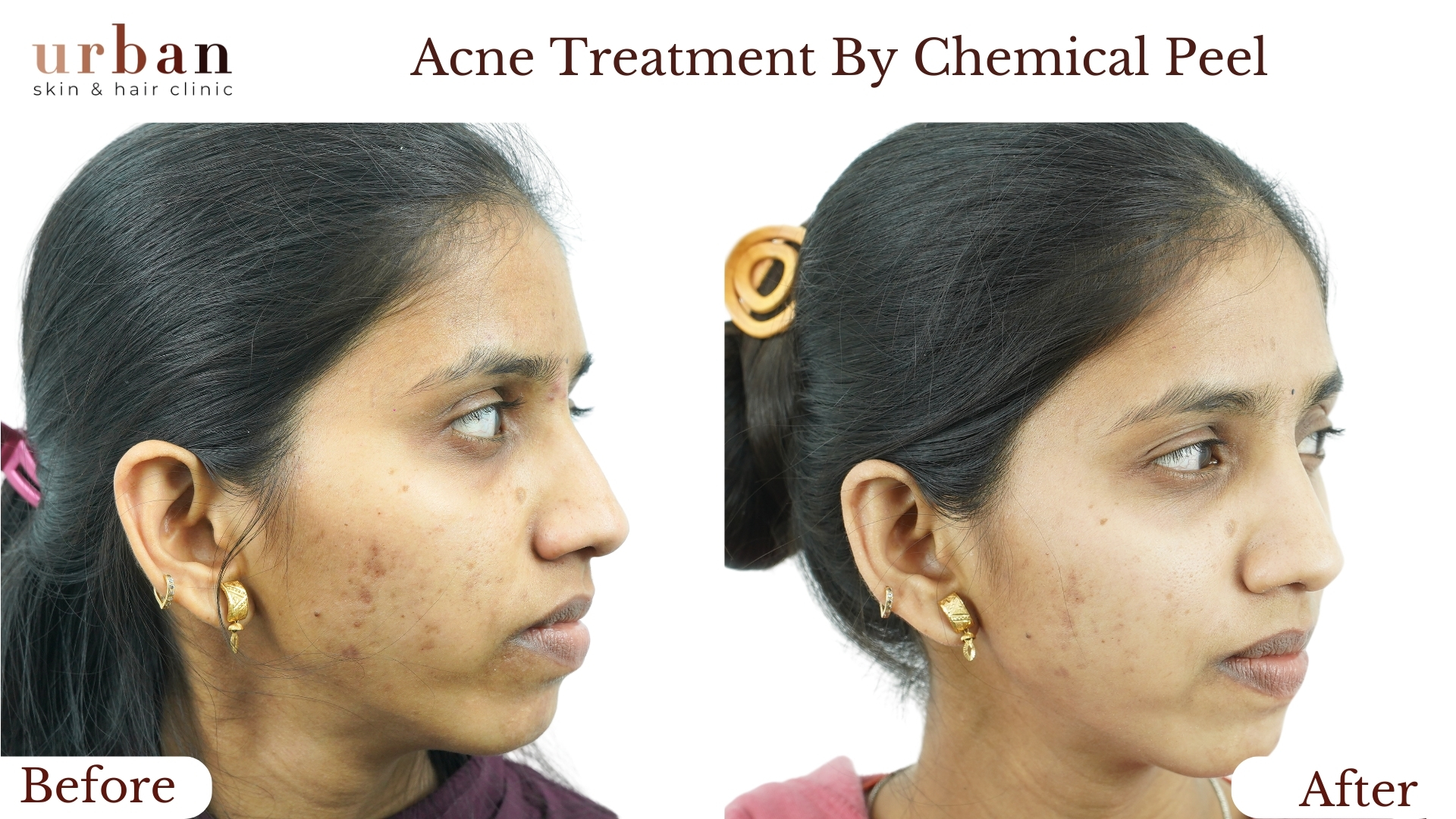
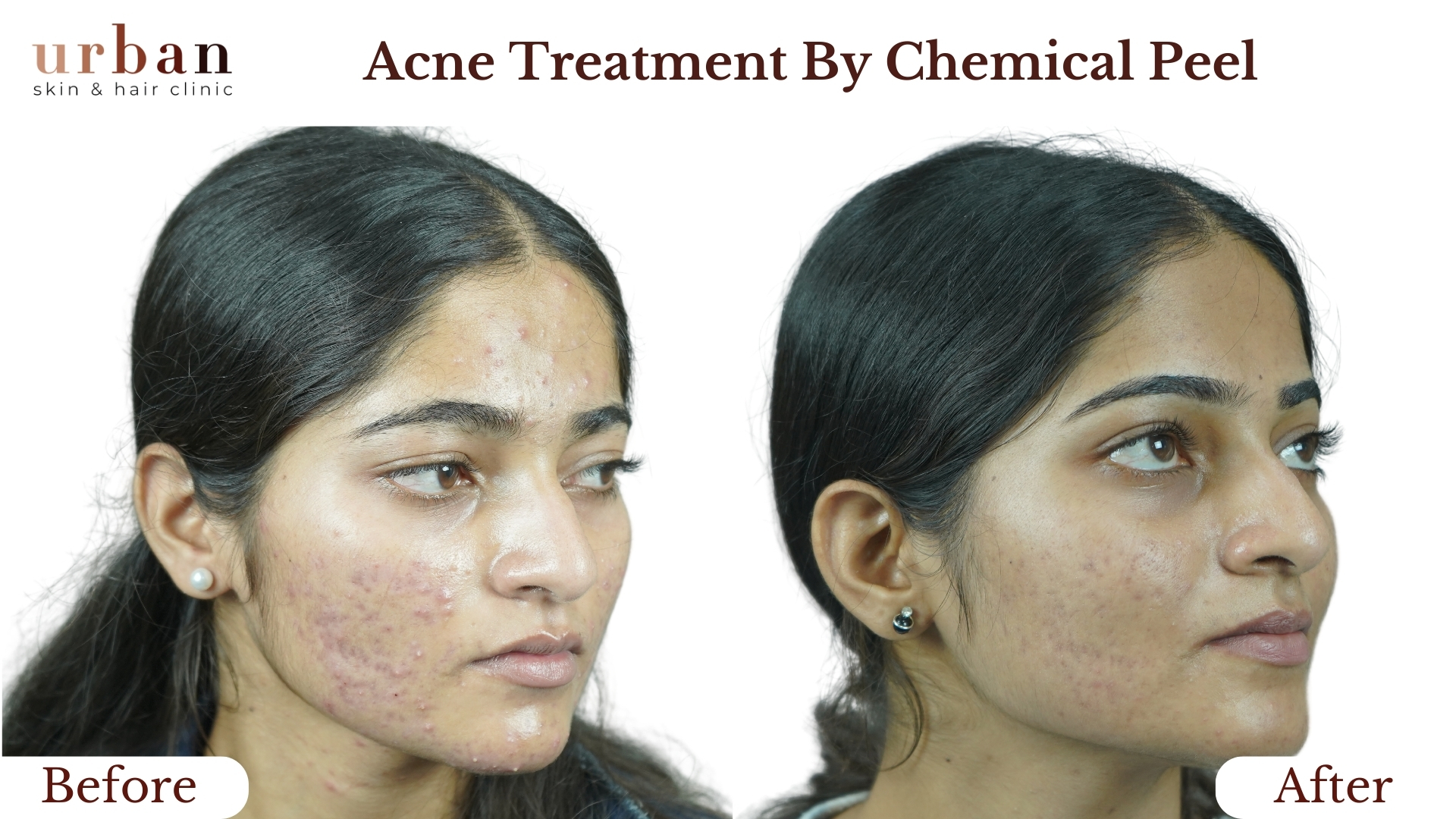
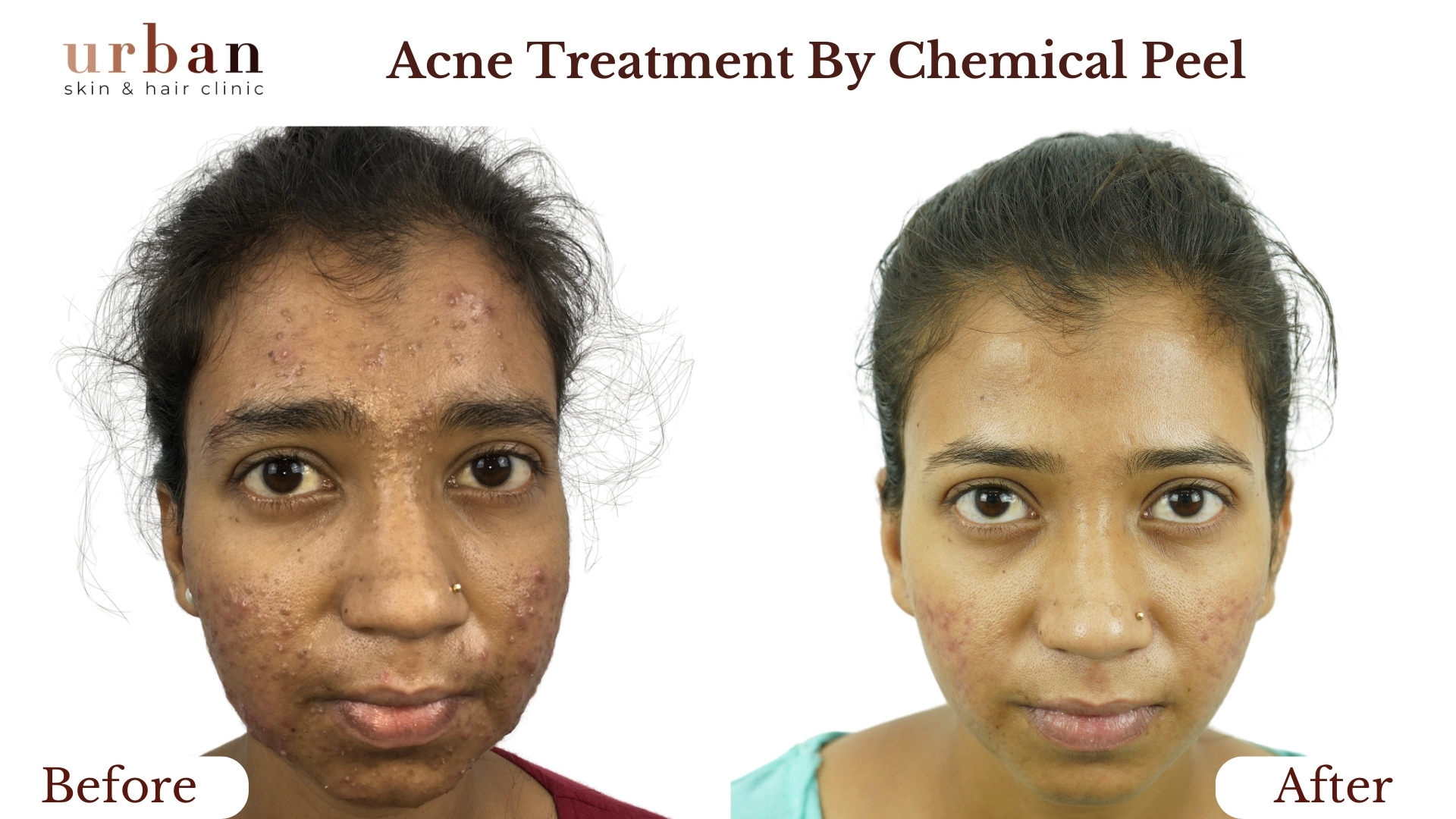
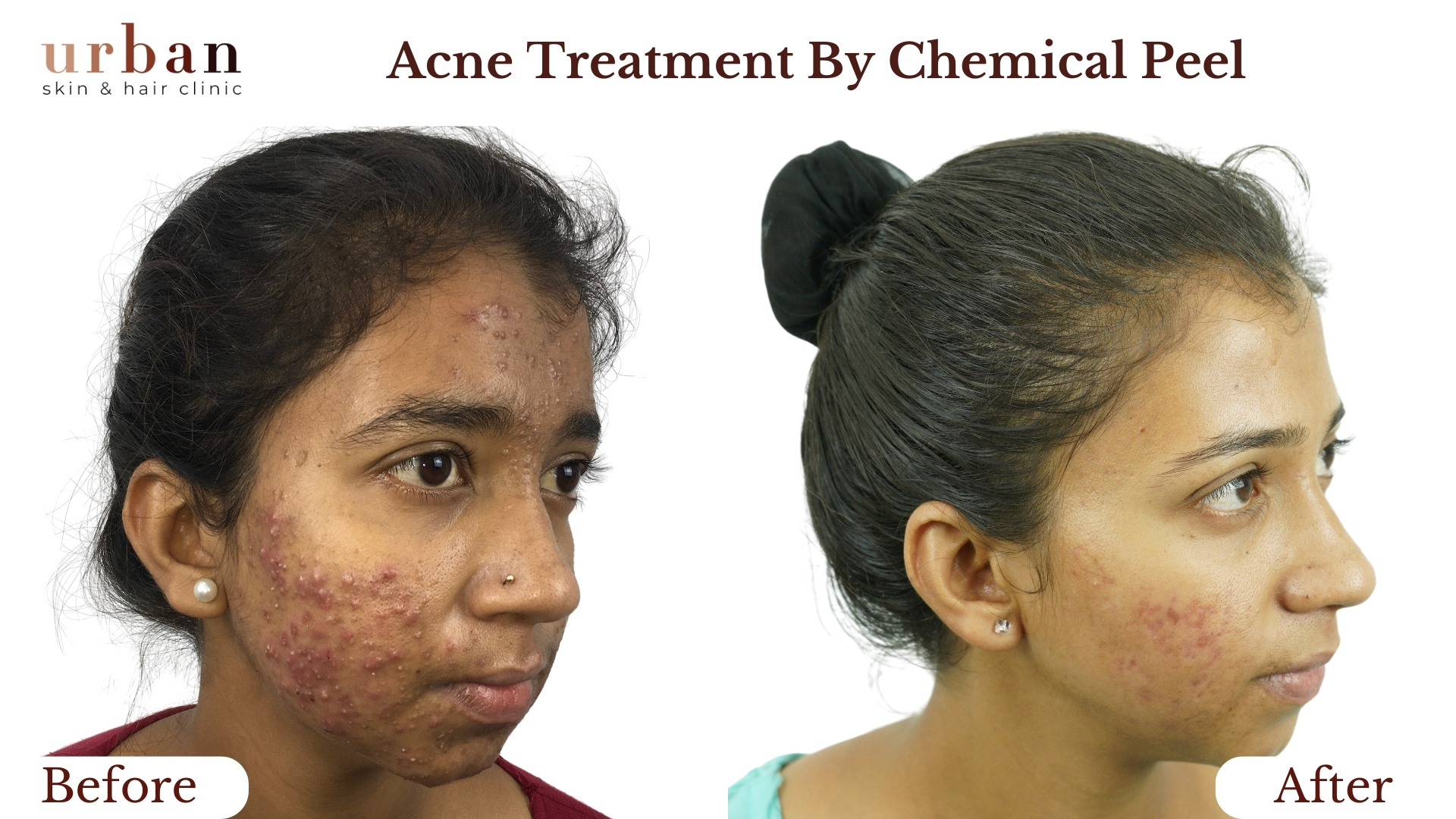
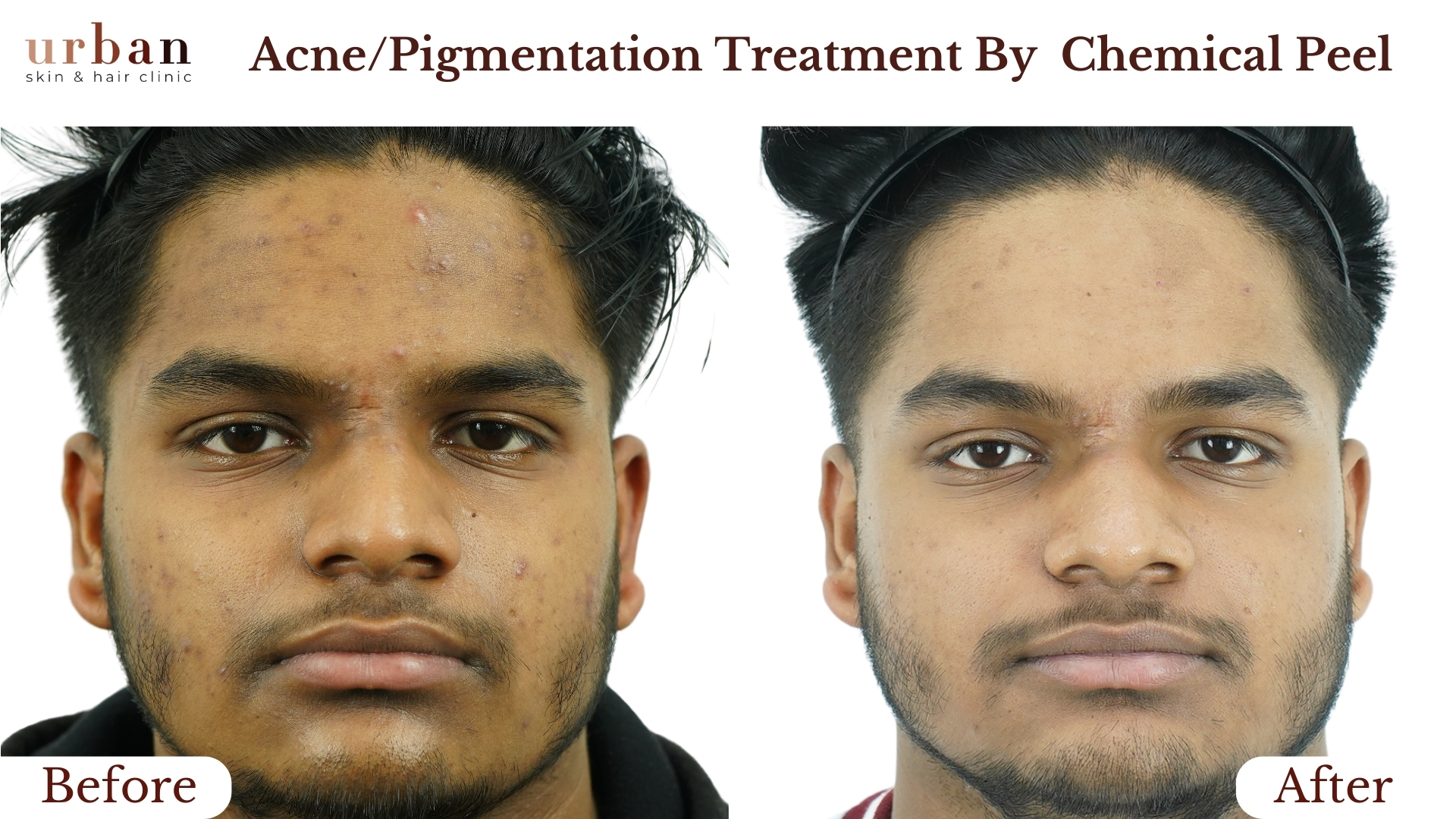
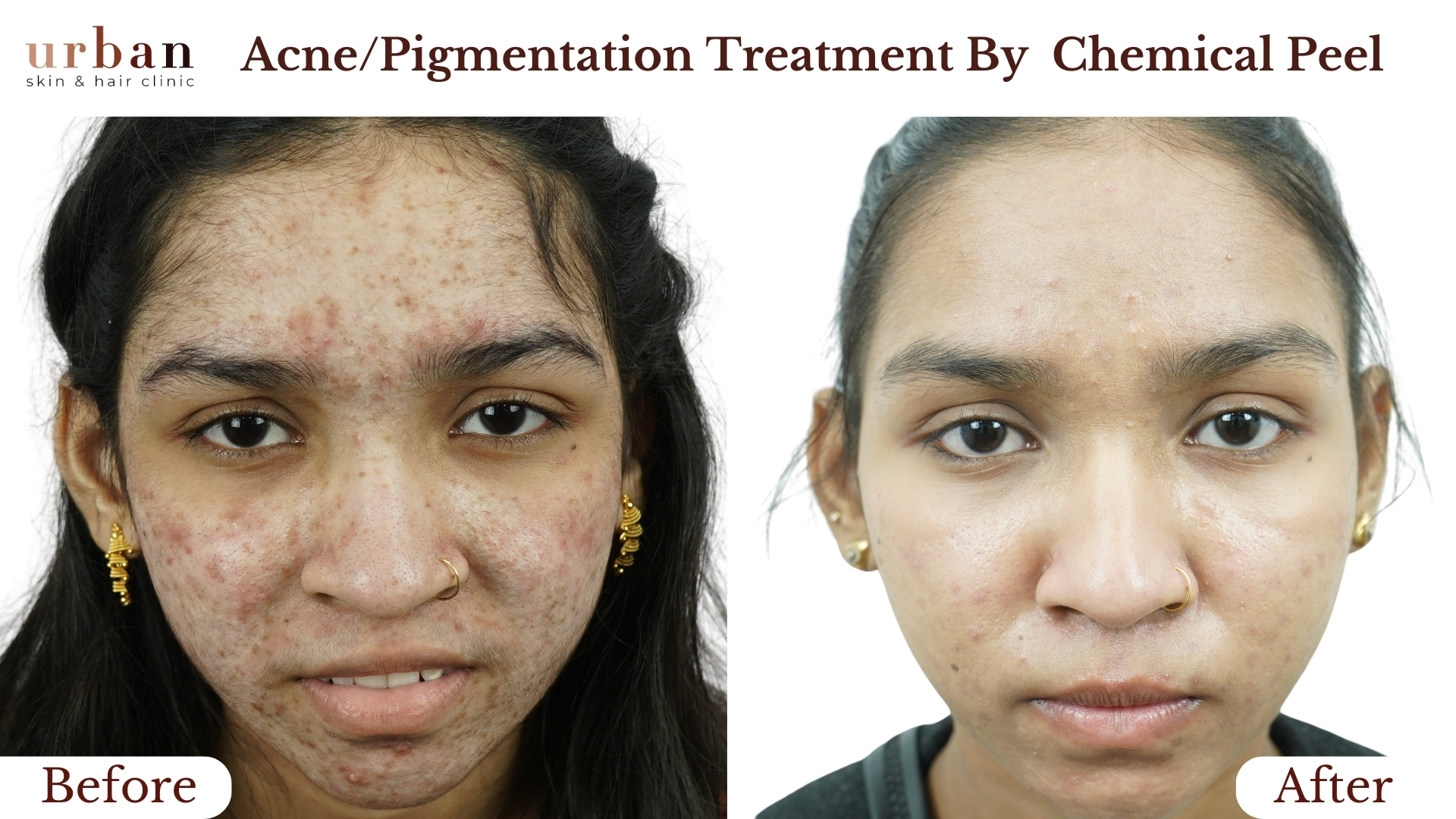
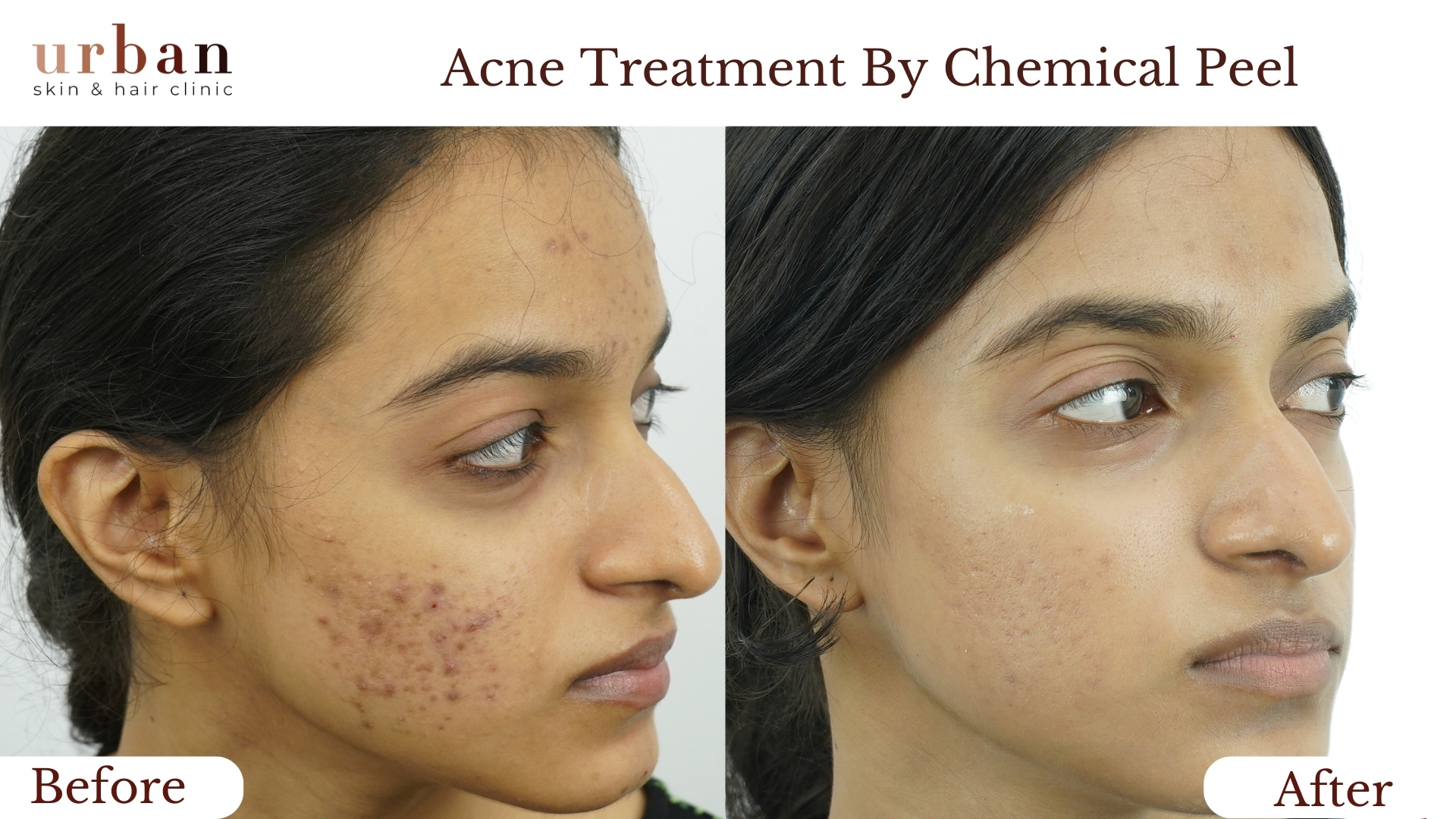
Acne - Pimple Treatment Results Before & After

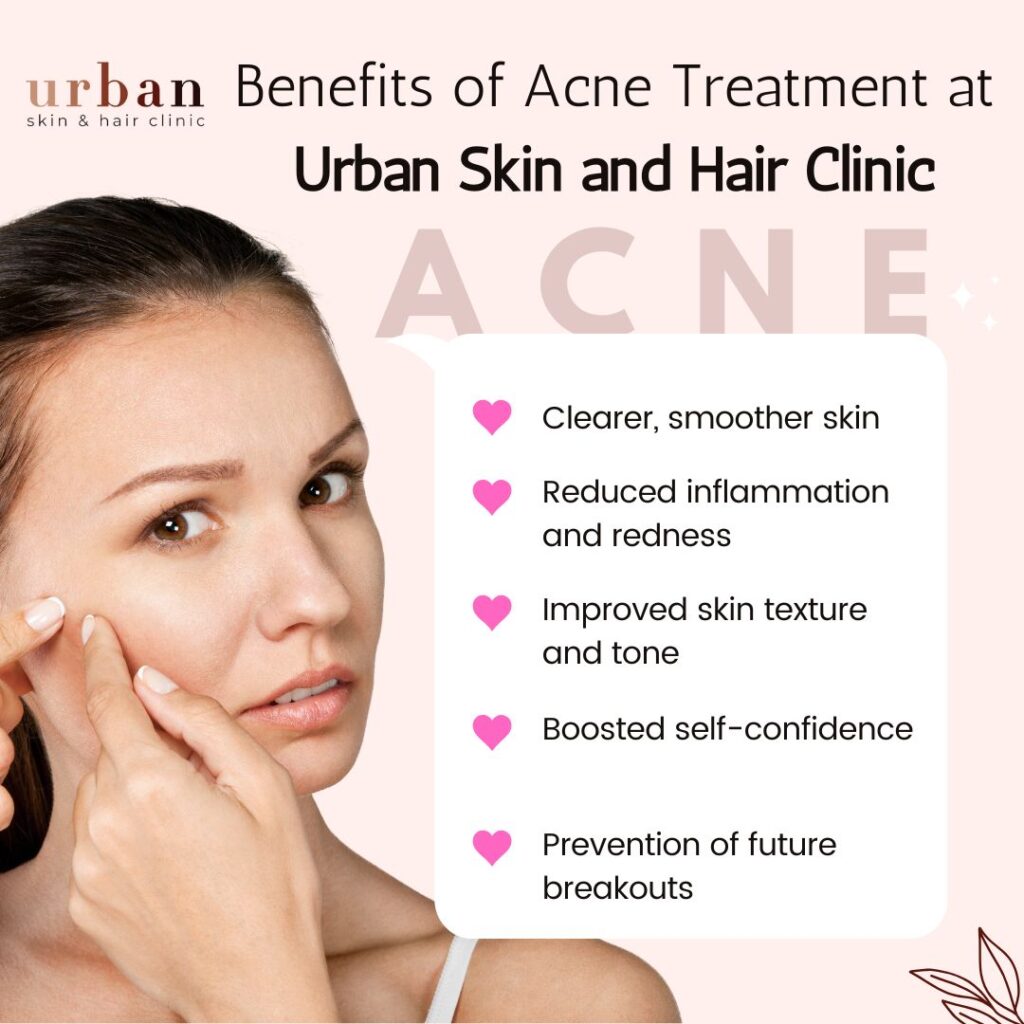
Benefits of Acne Treatment
Experience the benefits of dark underarms treatment in Pune at Urban Skin and Hair Clinic:
- Lighter Skin Tone: Reduce pigmentation caused by friction, shaving, or hormonal changes for brighter underarms
- Smoother Texture: Gentle exfoliation and collagen boost for soft, even skin
- Reduced Discoloration: Advanced peels and laser treatments to target dark patches effectively
- Enhanced Confidence: Feel confident wearing sleeveless outfits with clear, radiant skin
- Long-Lasting Results: Personalised care to maintain even tone and prevent recurrence
Looking for the best underarm whitening treatment in Pune or underarm pigmentation treatment in PCMC? Our expert dermatologists provide safe, effective, and customised solutions for visible results.
Popular Treatments for Acne
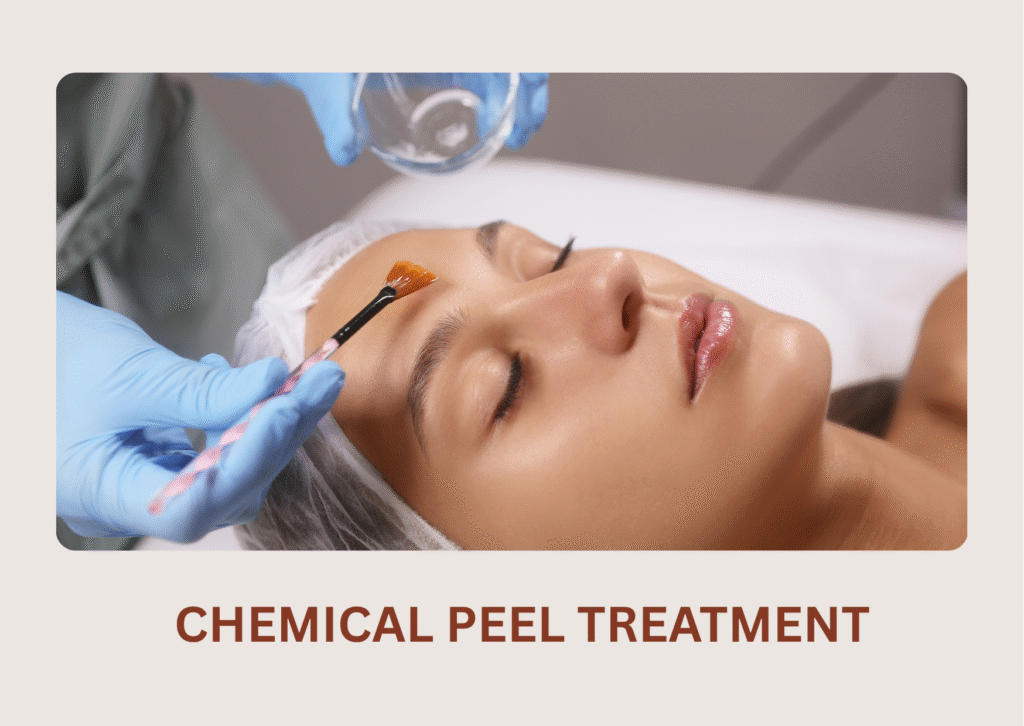
Clears active acne and brightens the skin by removing clogged, damaged surface layers.
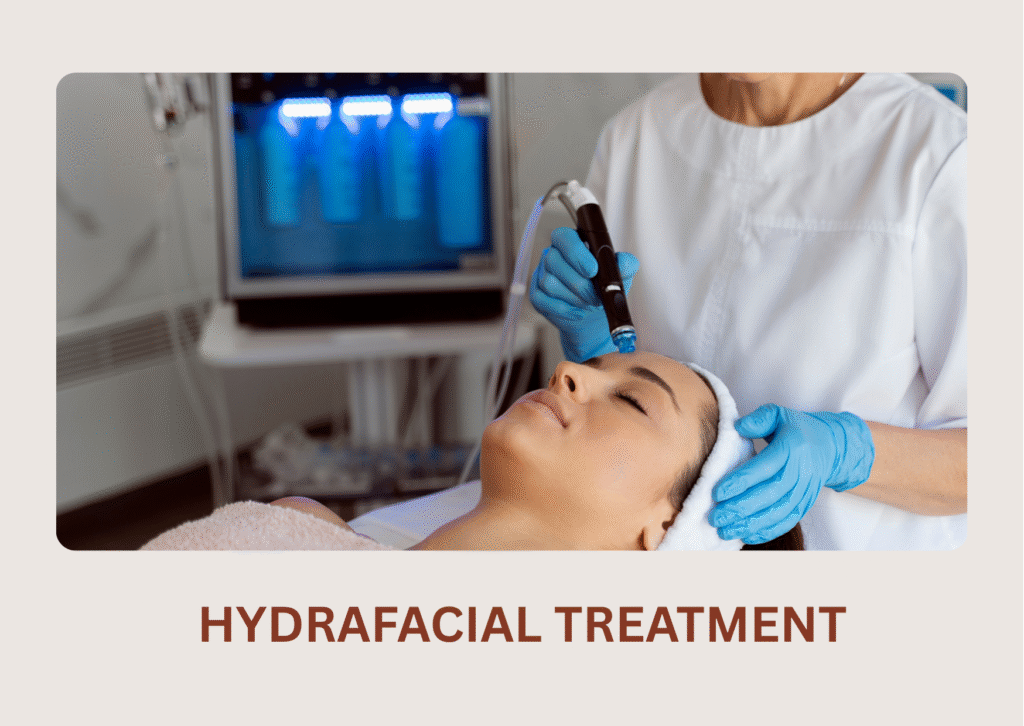
Deeply cleanses pores and reduces acne-causing oil and bacteria for clearer skin.
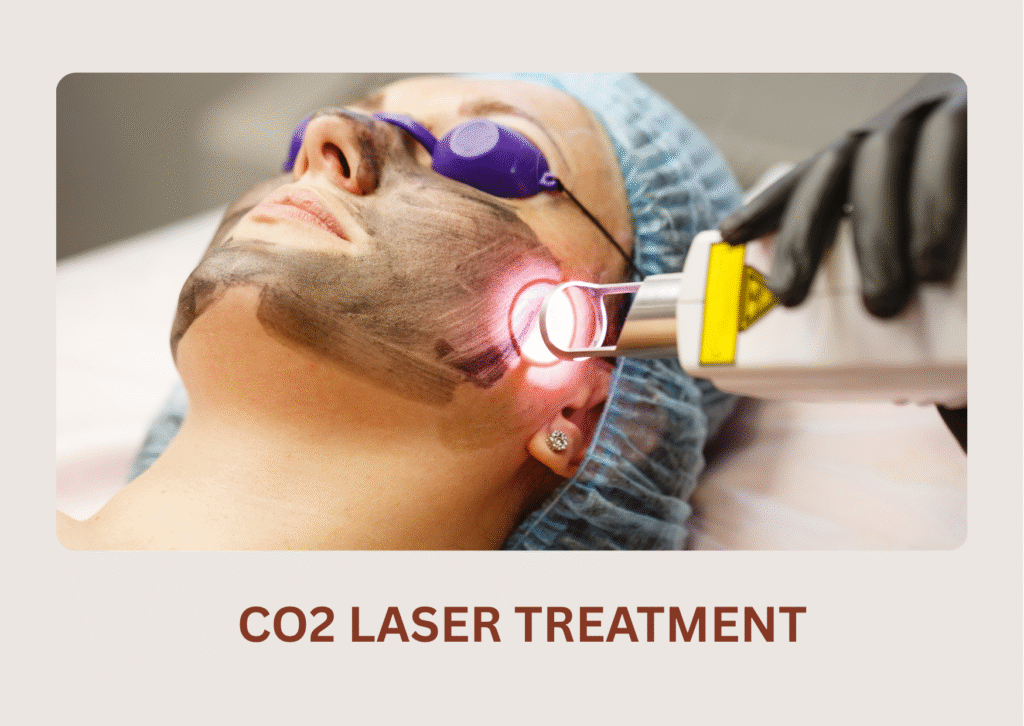
Helps reduce deep acne scars by resurfacing the skin for a smoother texture.
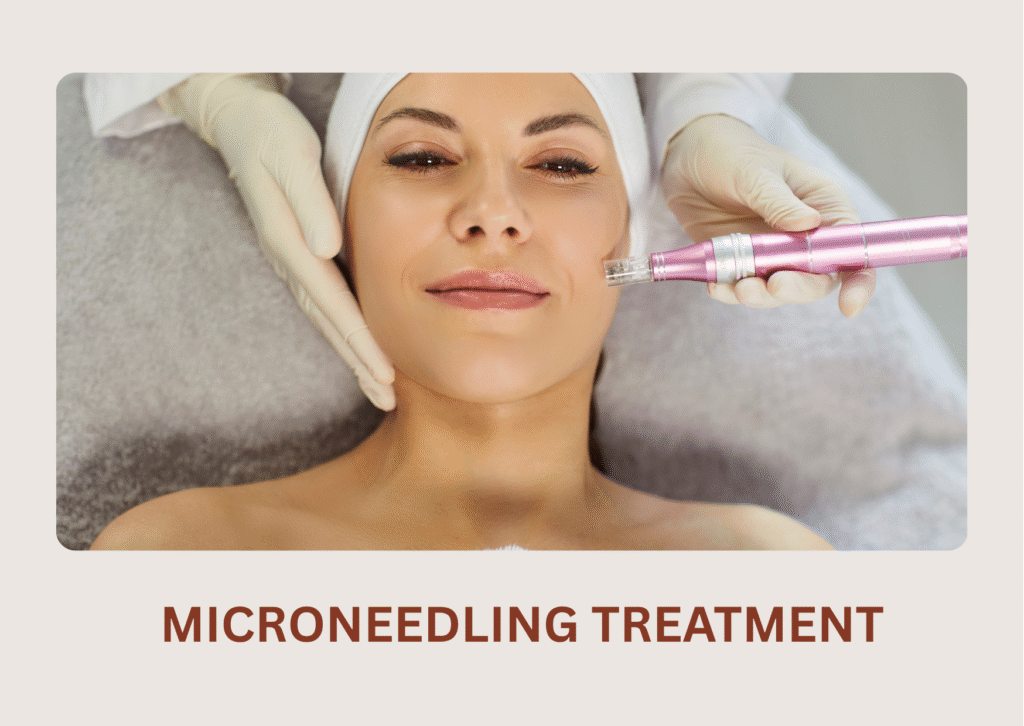
Stimulates collagen to reduce acne scars and improve overall skin texture.
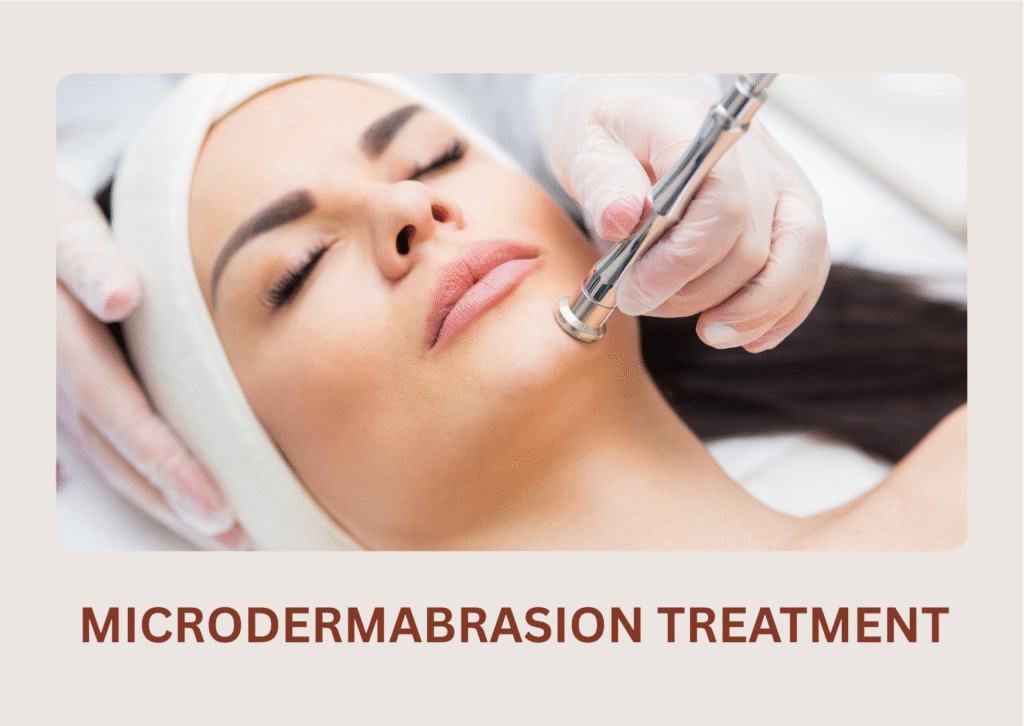
Gently exfoliates dead skin cells to prevent clogged pores and minimize mild acne.
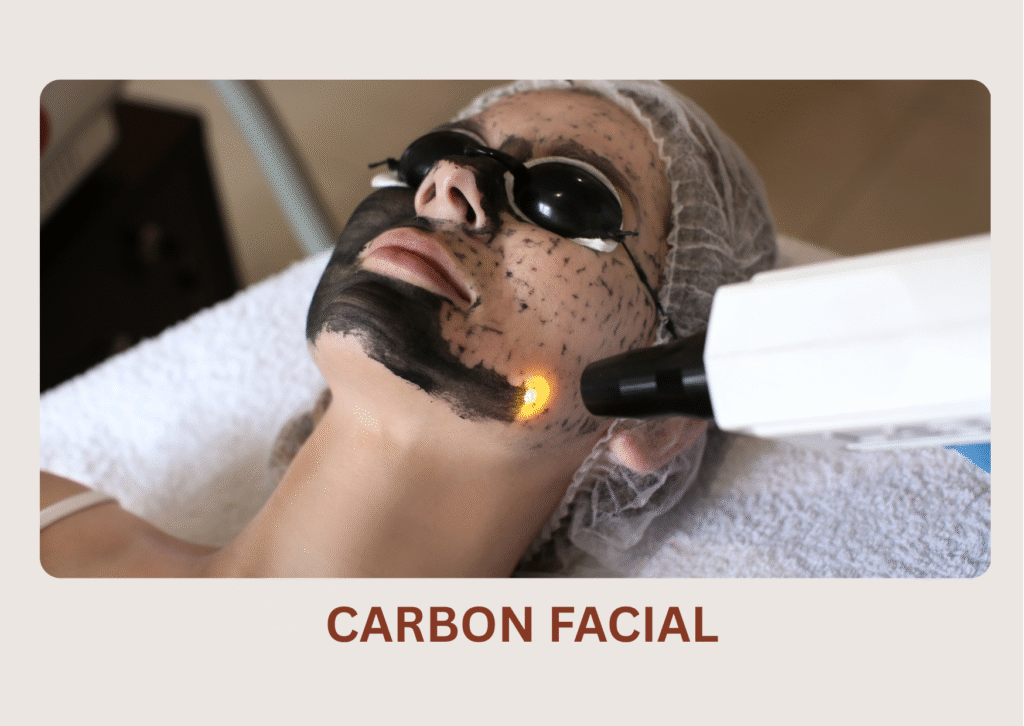
Controls excess oil, shrinks pores, and targets acne-causing impurities for clearer skin.
How To Prevent Acne?
Follow these dermatologist-recommended tips for managing acne-prone skin and improving results from acne treatment in Pune:
- Wash your face twice daily with a gentle cleanser, especially after sweating
- Use non-comedogenic, oil-free skincare products to prevent clogged pores
- Avoid popping or picking pimples to reduce inflammation and acne scars
- Apply sunscreen daily to protect sensitive, acne-prone skin
- Keep pillowcases clean and maintain proper hygiene
- Stay hydrated to support clear, healthy skin
Does Self-Care Help?
While these tips can help manage mild acne, they may not be enough for moderate to severe cases. If breakouts persist or scars develop, consult experts at Urban Skin and Hair Clinic for advanced and personalised acne treatment in PCMC to prevent long-term skin damage.
Consult a Specialist Today
Simple habits like eating healthy, managing stress, and avoiding picking pimples can help control breakouts and support acne treatment in Pune. However, these methods may only provide temporary relief.
If your acne persists despite self-care, you may require professional or prescription-based solutions. Consulting experts at Urban Skin and Hair Clinic ensures accurate diagnosis and effective acne treatment in PCMC, helping prevent long-term scars and achieve clearer skin.
FAQ's
If your acne is painful, spreading, causing scars, or not improving with basic care, it’s time to seek expert help. For the best acne treatment in Pune or acne treatment in PCMC, consult specialists at Urban Skin and Hair Clinic for effective and personalised solutions.
Yes, certain foods like high sugar, dairy (especially skim milk), and refined carbs may trigger breakouts in some individuals. However, triggers vary from person to person. For personalised guidance and effective acne treatment in Pune, consult experts at Urban Skin and Hair Clinic to identify your specific triggers and manage acne effectively.
No, acne is not contagious—you cannot catch it from someone else. It is caused by internal factors like excess oil production, hormonal changes, and clogged pores. For expert guidance and effective acne treatment in Pune, consult specialists at Urban Skin and Hair Clinic for personalised care.
Acne can cause scars and dark spots if it is severe, picked, or deeply inflamed. Early care and the right treatment are important to prevent long-term damage. For effective acne scar treatment in Pune and acne treatment in PCMC, consult experts at Urban Skin and Hair Clinic for personalised solutions.
Mild acne may improve within 3–4 weeks, while moderate acne can take 6–8 weeks. Severe acne may require a few months of consistent care. Patience and the right treatment plan are key. For effective and personalised acne treatment in Pune and acne treatment in PCMC, consult experts at Urban Skin and Hair Clinic.